License No: 237321

Ama Dablam Expedition

Ama Dablam Expedition

one of Nepal's most iconic and technically demanding peaks.

Everest Region

Max Elevation

Max Elevation

6812m

Duration

Duration

30 days

Group Size

Group Size

8 Pax

Difficulty

Difficulty

Hard

Enquire Now
Trek Starting Point

Trek Starting Point

Lukla

Trek Ending Point

Trek Ending Point

Lukla

Departure From

Departure From

Ramechhap

Transportation

Transportation

Domestic flight

Style

Style

High-altitude trekking & peak climbing

Meal

Meal

Breakfast, Lunch, Dinner

Accommodation

Accommodation

Camping

Overview

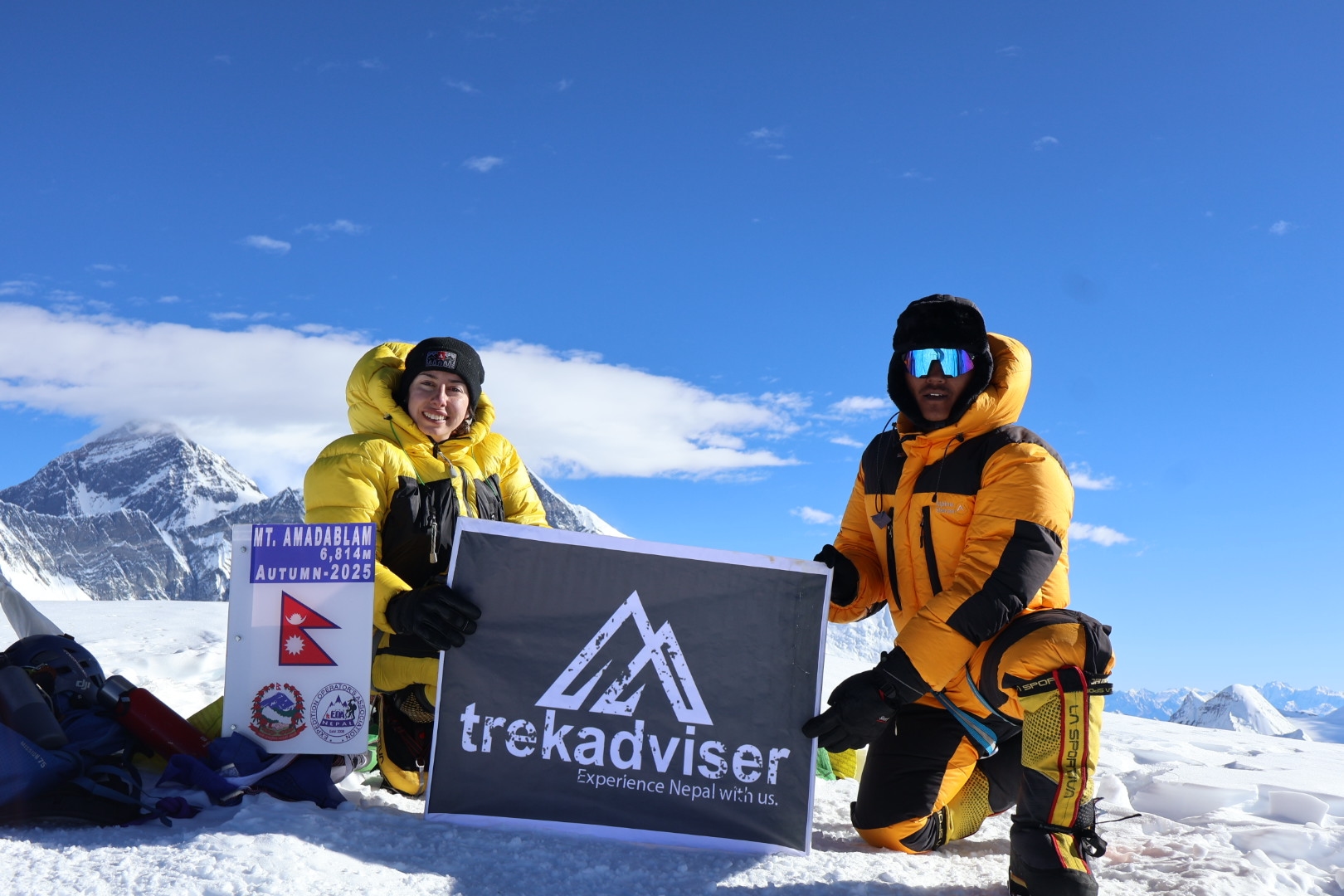
Ama Dablam Expedition is a challenging Himalayan mountaineering adventure to the summit of Ama Dablam (6,812 m), one of Nepal's most iconic and technically demanding peaks.

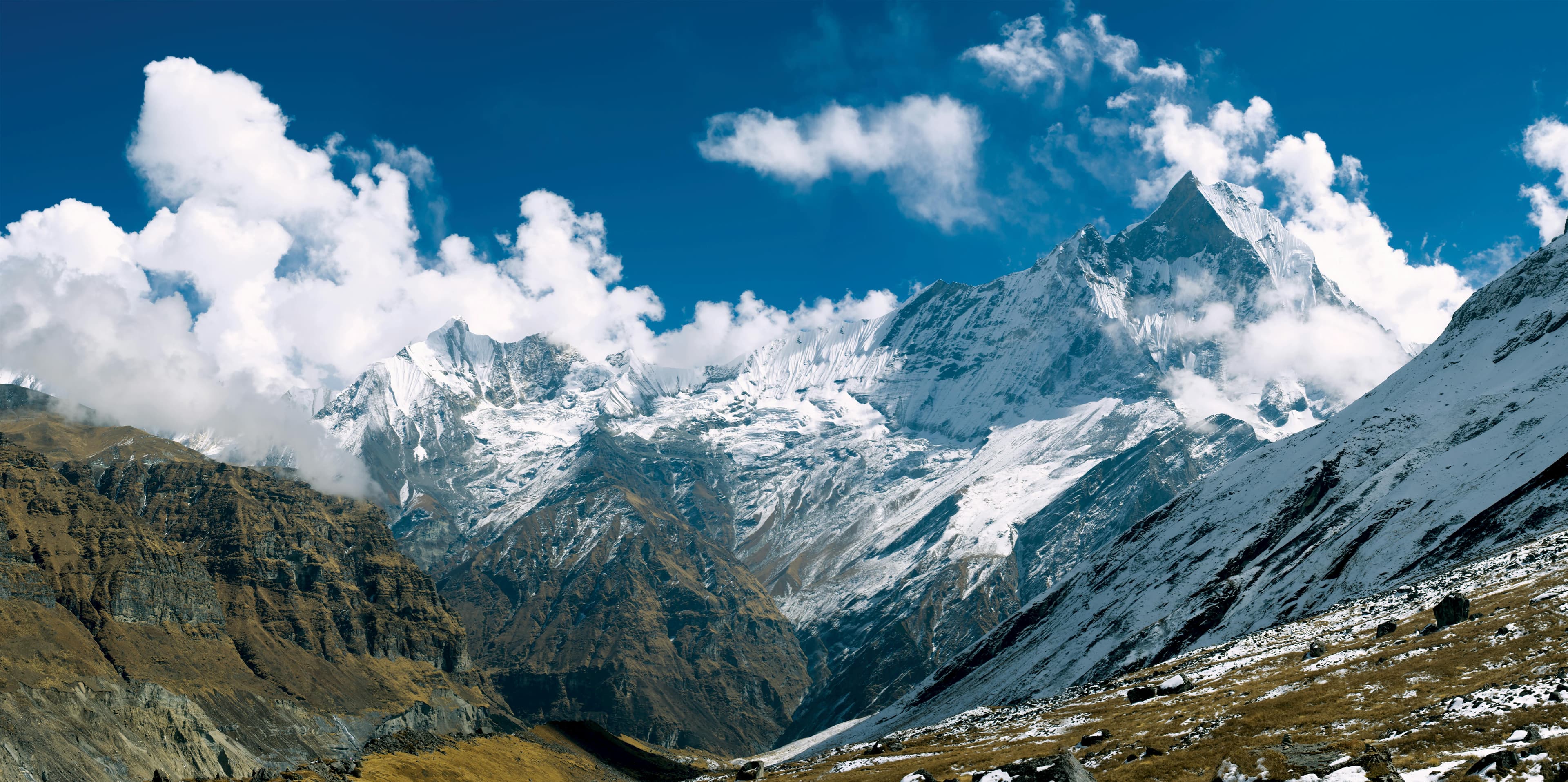
Located in Nepal's Khumbu region, Ama Dablam is renowned for its distinctive pyramid-shaped summit, dramatic ridges, steep rock sections, exposed snow and ice climbing, and spectacular views of Everest, Lhotse, Nuptse, Makalu, Baruntse, and surrounding Himalayan peaks.

Unlike a high-altitude trekking peak, Ama Dablam requires strong physical fitness, previous high-altitude experience, technical climbing ability, and good judgment in exposed terrain. Climbers should be comfortable using crampons, an ice axe, ascenders, fixed ropes, harnesses, and other mountaineering equipment.

Our expedition combines a gradual approach through the Everest region with acclimatization rotations and technical preparation at Ama Dablam Base Camp. The climbing schedule remains flexible because summit success depends heavily on weather, snow and ice conditions, route conditions, acclimatization, and the decisions of the expedition leader.

Ama Dablam Expedition Highlights

Summit attempt of Ama Dablam – 6,812 m

Scenic flight from Kathmandu to Lukla

Trek through the legendary Khumbu Valley

Acclimatization in Namche Bazaar and Dingboche

Visit Everest Base Camp

Ama Dablam Base Camp experience

Technical climbing training and gear preparation

Acclimatization and rotation through higher camps

Guided summit attempt with experienced climbing support

Spectacular views of Everest, Lhotse, Nuptse, Makalu and other Himalayan giants

Experienced local expedition team and logistical support

Program Itinerary

Welcome to Nepal.

Upon your arrival at Tribhuvan International Airport, our representative will meet you and transfer you to your hotel in Kathmandu.

After check-in, you can rest and recover from your international journey. Depending on your arrival time, our team will provide an introduction to the expedition and discuss the upcoming schedule.

Today is dedicated to expedition preparation.

Our team will review your climbing equipment, documentation, permits, insurance, clothing, technical gear, and other essential equipment required for Ama Dablam.

If you are missing any equipment, Kathmandu has several shops where technical mountaineering gear can be rented or purchased.

There may also be time for a short sightseeing program in Kathmandu, depending on the expedition schedule.

After an early breakfast, we travel to the airport for our flight toward Lukla, the gateway to the Everest region.

The short mountain flight offers spectacular views of the Himalayan landscape.

After landing at Lukla, we meet our supporting team and begin trekking through the Dudh Koshi Valley toward Phakding.

Today we continue toward Namche Bazaar.

The trail follows the Dudh Koshi River and crosses several suspension bridges before entering Sagarmatha National Park.

After crossing the famous Hillary Suspension Bridge, the trail climbs steadily toward Namche Bazaar, the main trading and acclimatization center of the Khumbu region.

Today is an important acclimatization day.

We take a gradual hike around Namche and nearby viewpoints to help the body adapt to increasing altitude.

Depending on conditions, you may visit the Everest View Hotel area, Khumjung, Khunde, or other nearby locations.

The principle is "climb high and sleep low", allowing the body to progressively adapt to the altitude.

After breakfast, we continue along the scenic Everest trail.

The route passes through forests of rhododendron and pine with spectacular views of Ama Dablam and other Himalayan peaks.

We gradually descend toward the Imja Valley before reaching Deboche.

We continue toward Dingboche, one of the most important acclimatization locations on the Everest route.

The landscape becomes increasingly alpine as we gain elevation and enter the upper Imja Valley.

Ama Dablam becomes increasingly prominent as we approach the mountain.

Today is another important acclimatization day.

We take a gradual hike to higher ground around Dingboche before returning to the village.

The day allows your body to adapt before moving toward the higher elevations of the Khumbu.

Your guide will also monitor your condition and discuss hydration, nutrition, altitude symptoms, and the upcoming expedition schedule.

We leave Dingboche and continue toward Lobuche.

The trail gradually climbs through the high-altitude landscape toward the Khumbu Glacier.

The environment becomes colder, drier, and more rugged as we approach Everest Base Camp.

Today we continue toward Gorak Shep and then hike to Everest Base Camp.

The trail follows the rugged Khumbu Glacier and offers magnificent views of the surrounding Himalayan peaks.

After exploring Everest Base Camp, we return to Gorak Shep for the night.

We retrace our route toward the lower Khumbu Valley and continue toward Pangboche.

The return journey allows the body to recover slightly as we descend to a lower elevation.

From Pangboche, the spectacular Ama Dablam becomes increasingly dominant.

Today we leave the main Everest trekking route and head toward Ama Dablam Base Camp.

The trail gradually climbs through the Imja Valley toward the mountain's base.

As we approach Base Camp, the impressive south-west ridge and pyramid-shaped summit of Ama Dablam come into view.

Upon arrival, the expedition team will organize accommodation, equipment, communications, food, and other logistics.

Day 13 – Rest and Acclimatization at Base Camp

The first day at Base Camp is focused on recovery and acclimatization.

The expedition team will conduct a briefing covering:

Climbing route

Weather conditions

Camp locations

Fixed ropes

Technical climbing sections

Emergency procedures

Communication

Summit strategy

You will also have time to organize your personal climbing equipment.

Overnight: Ama Dablam Base Camp

Today focuses on technical preparation.

Depending on conditions, the climbing team will practice or review:

Crampon techniques

Ice-axe use

Ascending fixed ropes

Descending fixed ropes

Harness systems

Carabiner use

Jumar/ascender techniques

Rappelling

Movement on steep terrain

Rope management

Emergency procedures

All essential expedition equipment will also be inspected.

Overnight: Ama Dablam Base Camp

A further recovery day is scheduled before the first major acclimatization rotation.

The climbing team will finalize equipment, food, ropes, oxygen strategy if applicable, and personal loads.

The expedition leader will assess weather and route conditions before confirming the next climbing movement.

Overnight: Ama Dablam Base Camp

We begin the first major acclimatization rotation.

The team climbs toward Camp I, gradually gaining elevation before returning according to the expedition leader's acclimatization plan.

The purpose is not to rush toward the summit but to expose the body to progressively higher elevations.

Overnight: Base Camp or designated higher camp depending on conditions.

The climbing team continues the acclimatization rotation toward Camp I.

Climbers practice movement on fixed ropes and become familiar with the route and terrain.

The team may spend time at higher elevation before descending toward Base Camp to recover.

Overnight: Base Camp / higher camp according to conditions.

The expedition team begins another rotation toward the higher camps.

Equipment and supplies may be positioned higher on the mountain according to the expedition strategy.

Camp II is located at approximately 5,900–6,000 m, although exact camp locations can vary depending on current route conditions.

Overnight: Higher camp / Base Camp according to expedition plan.

After completing the acclimatization rotation, we return to Ama Dablam Base Camp.

This is an important recovery period.

The expedition team reviews the climbers' health, acclimatization, weather forecast, route conditions, and summit strategy.

Overnight: Ama Dablam Base Camp

A full rest day is scheduled at Base Camp.

Climbers focus on hydration, nutrition, recovery, and preparation for the summit rotation.

The climbing team will continue monitoring weather and mountain conditions.

Overnight: Ama Dablam Base Camp

Another important recovery and preparation day.

The expedition leader will review:

Summit weather forecast

Route conditions

Rope fixing

Camp conditions

Personal equipment

Climbing strategy

Emergency procedures

Summit departure timing

The exact summit schedule may be adjusted according to conditions.

Overnight: Ama Dablam Base Camp

Day 23 – Base Camp to Camp I

We leave Base Camp and climb toward Camp I, approximately 5,700 m depending on the route and current camp position.

The climb becomes increasingly technical and physically demanding.

The team follows fixed ropes and maintains appropriate spacing and climbing discipline.

Overnight: Camp I

Early in the morning, we continue toward Camp II.

The route includes steep and exposed climbing terrain, requiring strong technical skills and efficient rope movement.

After reaching Camp II, the team rests and prepares for the summit attempt.

Overnight: Camp II, approximately 5,900–6,000 m

Summit day is the most demanding and important day of the expedition.

The team begins climbing during the early hours, with the exact departure time determined by weather, route conditions, and the expedition leader.

The climb involves sustained technical terrain, steep sections, fixed ropes, snow and ice, and high-altitude exposure.

After reaching the summit of Ama Dablam at 6,812 m, climbers spend only the necessary time at the summit before beginning the descent.

The primary objective is always a safe summit and safe return.

Depending on weather, route conditions, climber condition, and the expedition strategy, the team may descend toward Camp I or another appropriate camp.

Overnight: Higher camp according to conditions

After the summit attempt, we descend toward Base Camp.

The descent is still physically demanding, particularly after a long summit day.

Upon reaching Base Camp, the expedition team can rest, recover, celebrate the achievement, and organize equipment for the return journey.

Overnight: Ama Dablam Base Camp

Day 27 – Ama Dablam Base Camp to Namche Bazaar

We leave Ama Dablam Base Camp and retrace our route through the Khumbu Valley.

As we descend, the air becomes warmer and oxygen levels increase, making the journey more comfortable.

We continue toward Namche Bazaar.

Our final trekking day takes us from Namche toward Lukla.

We descend through forests, suspension bridges, Sherpa villages, and the Dudh Koshi Valley.

After reaching Lukla, we check in for the following day's flight to Kathmandu.

We take a morning flight from Lukla back to Kathmandu, subject to weather and airport operating conditions.

Upon arrival in Kathmandu, you will be transferred to your hotel.

The rest of the day is free for relaxation, shopping, or exploring Kathmandu.

Your Ama Dablam Expedition officially comes to an end today.

Our representative will transfer you to Tribhuvan International Airport according to your international flight schedule.

We hope you leave Nepal with unforgettable memories of the Himalayas and your Ama Dablam adventure.

Route Map

Cost Includes

  • Airport pick-up and drop-off service
  • Hotel accommodation in Kathmandu on a twin-sharing basis
  • Breakfast at the Kathmandu hotel
  • Guided Kathmandu Valley sightseeing tour
  • Experienced local sightseeing guide
  • Applicable sightseeing entrance fees
  • Kathmandu–Lukla–Kathmandu domestic flights
  • Transportation required according to the itinerary
  • Tourist coach, local transportation, or private vehicle where applicable
  • Teahouse, guesthouse, or homestay accommodation during the trekking section
  • Tent accommodation during the expedition section
  • Breakfast, lunch, and dinner during the trekking and expedition period as specified in the itinerary
  • Experienced licensed English-speaking trekking and expedition guide
  • Ama Dablam expedition logistics
  • Expedition permit
  • Sagarmatha National Park entry permit
  • Applicable local government permits and fees
  • TIMS card, where applicable under current regulations
  • Garbage deposit
  • Expedition Base Camp arrangements
  • Necessary expedition tents and camp infrastructure as included in the package
  • Required administrative paperwork
  • Office service charges
  • Applicable government taxes
  • Guide and porter insurance
  • Medical kit carried by the expedition/trekking team
  • Basic expedition support and coordination
  • Down jacket
  • All-season sleeping bag
  • Duffel bag
  • Trekking map

Optional Add-ons

  • trekking insurance
  • hotel extra night
  • potter service per day

Cost Excludes

  • International airfare
  • Travel insurance
  • Helicopter evacuation and rescue costs
  • Emergency medical treatment
  • Insurance covering high-altitude mountaineering
  • Nepal visa fee
  • Personal climbing equipment
  • Technical expedition gear unless specifically listed as included
  • Personal clothing and trekking equipment
  • Personal expenses
  • Lunch and dinner in Kathmandu
  • Alcoholic and other personal beverages
  • Hot showers and other optional facilities during the trek
  • Personal communication expenses
  • Internet/Wi-Fi charges where applicable
  • Tips for guides, climbing staff, porters, drivers, and support staff
  • Extra hotel nights in Kathmandu
  • Extra accommodation caused by early arrival, delayed departure, early return, flight cancellation, weather disruption, or other unforeseen circumstances
  • Any additional transportation not specified in the itinerary
  • Additional evacuation or rescue expenses
  • Any expenses resulting from changing the itinerary due to weather, natural disasters, political circumstances, health issues, or other unforeseen events
  • Any other expenses not specifically mentioned under What's Included

Fixed Departure

30 days

Start - Sep 1, 2026

End - Nov 30, 2026

Booking Open

10 PAX

30 days

Start - Oct 20, 2026

End - Nov 19, 2026

Booking Open

6 PAX

30 days

Start - Oct 1, 2026

End - Oct 30, 2026

Sold Out

Sold Out

Sold OutEnquire Now

30 days

Start - Sep 30, 2026

End - Oct 31, 2026

Booking Open

8 PAX

Travel Guide