

Arrival at Tribhuwan International Airport. Our Staff member meets you and transfers you to the hotel.
Overnight at the hotel.
Annapurna Region

Trek Starting Point
Nayapul

Trek Ending Point
New Bridge

Departure From
Kathmandu

Transportation
Tourist Coach, Local Jeep, Private Vehicle

Style
High-altitude Trekking & Climbing

Meal
Breakfast, Lunch, Dinner

Accommodation
Tourist standard hotel in Kathmandu, Teahouse during trek
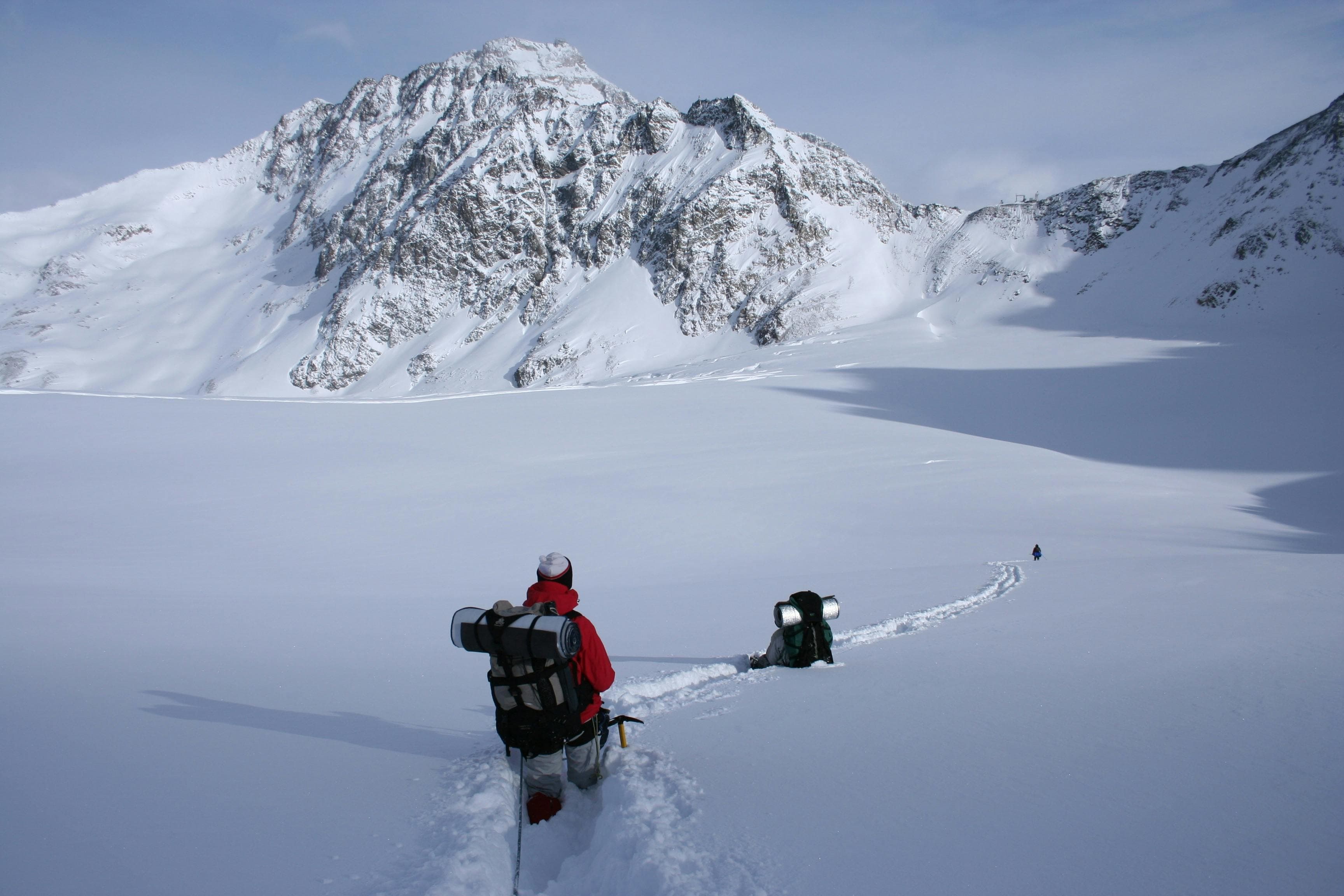
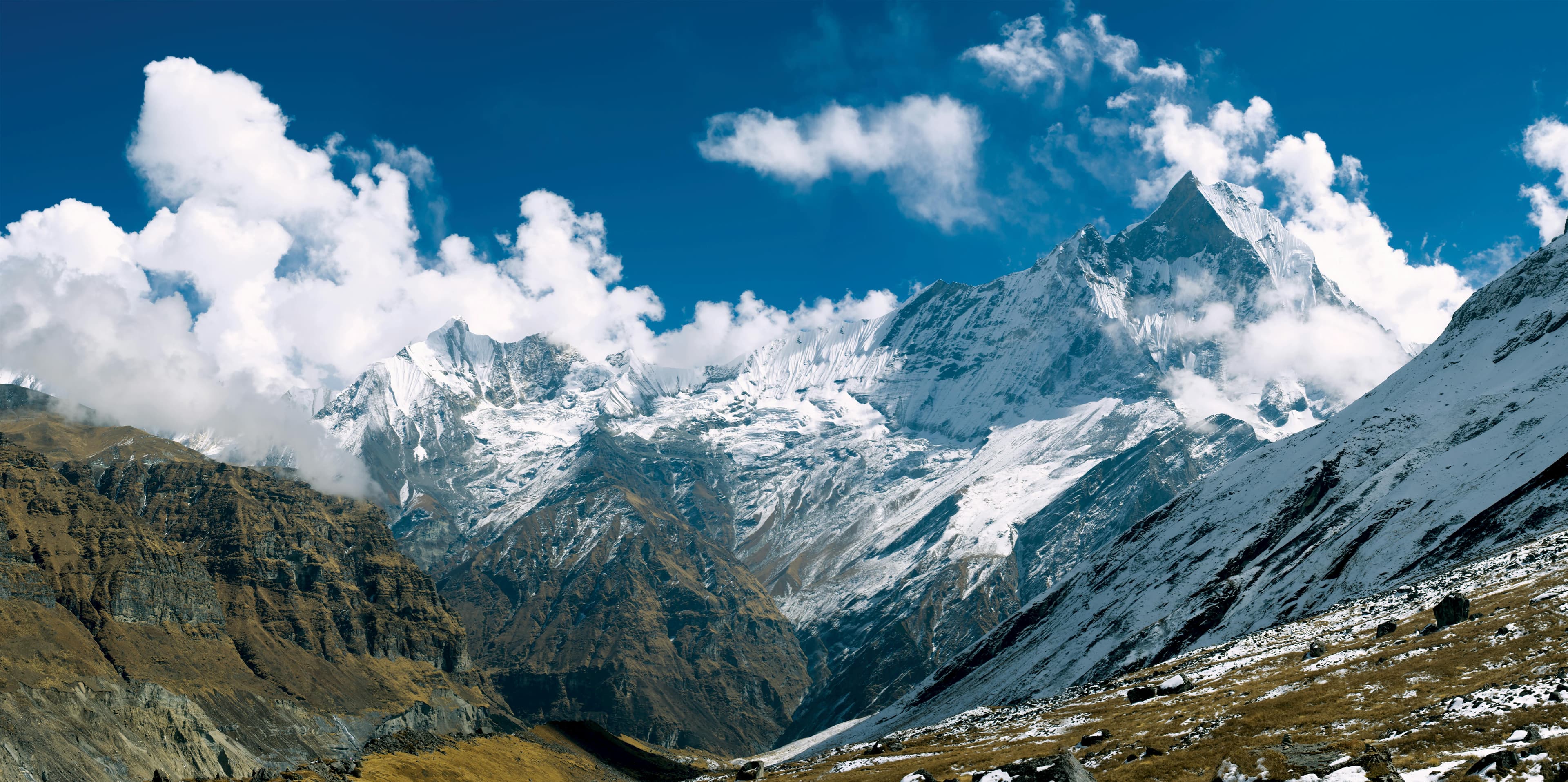
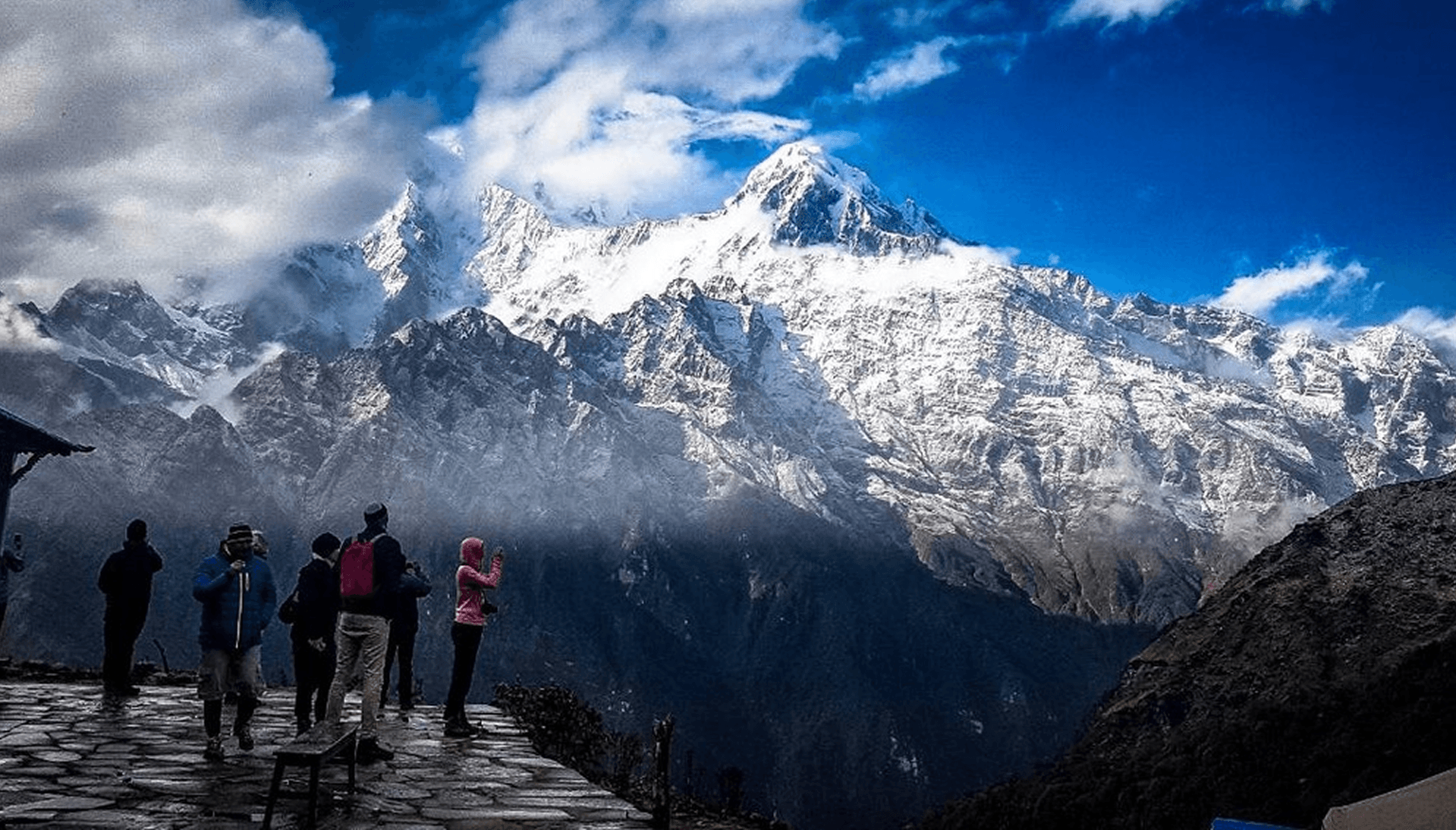
Singu Chuli, also known as Fluted Peak (6,501 m / 21,329 ft), is a technical climbing peak located in the Annapurna Sanctuary of Nepal. Rising just north of the Annapurna Base Camp route, the mountain forms part of the impressive ring of glaciated summits surrounding the sanctuary.
Despite its location along one of Nepal's most popular trekking routes, Singu Chuli is considered a serious Himalayan climbing objective rather than a standard trekking peak. The mountain involves steep snow and ice slopes, mixed climbing sections, exposed ridges, and sustained technical terrain. Depending on route and seasonal conditions, the climb may require advanced skills in alpine movement, fixed rope techniques, and glacier travel.
The first successful ascent of Singu Chuli was completed in 1957 by British climbers Wilfrid Noyce and David Cox, representing one of the early exploratory climbs in the Annapurna region. Since then, the peak has remained a less frequently climbed objective due to its technical nature, exposure, and demanding alpine conditions.
Most expeditions approach Singu Chuli through the Annapurna Sanctuary route, passing Machapuchare Base Camp and Annapurna Base Camp before moving toward higher camps on the glacier and upper ridges. The summit climb requires careful preparation, technical climbing experience, and the ability to operate safely in high-altitude environments.
With its combination of technical climbing, glaciated terrain, and the dramatic setting of the Annapurna Sanctuary, Singu Chuli offers an exceptional Himalayan challenge for experienced climbers seeking a demanding alpine ascent in Nepal.
Arrival at Tribhuwan International Airport. Our Staff member meets you and transfers you to the hotel.
Overnight at the hotel.
After breakfast at the hotel, our guide will meet you for a detailed trip briefing covering the itinerary, route conditions, safety procedures, altitude considerations, and important preparations for the journey ahead. For peak climbing expeditions, the climbing guide will also check the required mountaineering equipment and provide guidance on any necessary gear adjustments before departure.
During the briefing, we will complete the required trekking and climbing formalities, including necessary permits and documentation. Afterward, we will explore some of Kathmandu Valley's cultural highlights, including UNESCO World Heritage Sites such as Boudhanath Stupa, one of the largest Buddhist stupas in the world, and Swayambhunath Stupa, also known as the Monkey Temple.
The rest of the day is free for final preparations, including organizing trekking equipment, purchasing any last-minute essentials, and making final arrangements before heading into the Himalaya. Overnight at the hotel.
The drive from Kathmandu to Pokhara begins with an early departure from the bustling valley, gradually giving way to rolling hills and terraced farmland. As the city fades, the journey settles into a scenic rhythm along the Prithvi Highway.
Following the highway westward, the road traces the Trishuli River, where rushing waters and steep gorges create a dramatic backdrop. Small towns and rural landscapes pass by, with occasional glimpses of the Annapurna Range on clear days.
After approximately 6–8 hours of driving, covering around 200 km (124 miles), we arrive in Pokhara, a serene lakeside city known for its natural beauty. The rest of the day is free to relax, perhaps by Phewa Lake.
Overnight at a hotel in Pokhara.
Our journey begins with a scenic drive from Pokhara (822 m) to Nayapul (1,070 m), the gateway to the Annapurna region. The drive takes around 1.5 hours, passing through terraced hills, riverside villages, and beautiful countryside landscapes.
From Nayapul, we begin our trek toward Tikhedhunga (1,540 m), covering approximately 10 – 12 km in 4 – 5 hours. The trail follows the Modi Khola River through traditional villages, farmland, and lush forests, with several suspension bridges and stone-paved paths along the way.
As we gradually ascend into the hills, the peaceful mountain scenery and warm local hospitality offer a perfect introduction to trekking in the Annapurna region.
Overnight at a teahouse in Tikhedhunga.
After breakfast in Tikhedhunga, we begin our ascent toward Ghorepani (2,860 m), covering approximately 12 – 13 km in 6 – 7 hours. Today is one of the most rewarding days of the trek, taking us deeper into the heart of the Annapurna region.
The trail starts with the famous stone stairway climb to Ulleri, a beautiful Magar village perched on the hillside. From here, we continue through enchanting rhododendron and oak forests, passing small settlements, waterfalls, and peaceful mountain trails along the way.
As we gain altitude, the mountain atmosphere becomes more dramatic and refreshing. Surrounded by dense forests and occasional Himalayan views, we finally arrive at the vibrant village of Ghorepani, beautifully set beneath the towering peaks of the Annapurna and Dhaulagiri ranges.
Overnight at a teahouse in Ghorepani.
Early in the morning, we hike to Poon Hill (3,210 m), the most famous viewpoint in the Annapurna region. The uphill walk from Ghorepani (2,874 m) takes around 45 minutes to 1 hour, rewarding us with a spectacular sunrise over the Annapurna and Dhaulagiri Himalayan ranges.
After enjoying the breathtaking mountain panorama, we return to Ghorepani for breakfast before continuing our trek toward Tadapani (2,610 m). Covering approximately 10 – 12 km in 6 – 7 hours, the trail winds through beautiful rhododendron forests, peaceful ridgelines, and scenic mountain landscapes.
Along the way, we enjoy occasional views of Annapurna South, Machhapuchhre, and Hiunchuli before arriving at the peaceful village of Tadapani, surrounded by lush forest and magnificent Himalayan scenery.
Overnight stay at a teahouse in Tadapani.
From Tadapani, we begin a beautifully varied day of trekking as we leave the quiet forested ridges behind and descend into the heart of the Annapurna foothills. The trail winds through ancient rhododendron and oak forests, where soft light filters through the canopy and distant mountain views appear between the trees.
We continue along a scenic ridge before descending steadily toward the Kimrong Khola valley. After crossing the river, the journey transforms into a gradual but steady ascent toward Chhomrong, a striking Gurung village perched high above the valley floor. This final climb is rewarded with ever-expanding views of Annapurna South and Machhapuchhre, rising dramatically above the horizon.
After approximately 5 – 6 hours of trekking, covering around 9 – 10 km, we arrive at Chhomrong (2,170 m) a beautifully located mountain settlement often considered the gateway to the Annapurna Sanctuary. The village welcomes us with warm hospitality, comfortable teahouses, and uninterrupted Himalayan panoramas. Overnight stay at a teahouse.
Today we will leave Chhomrong (2,170 m) behind and journey deeper into the Annapurna Sanctuary, entering a landscape where terraced villages slowly fade into dense forest and untouched Himalayan wilderness.
We begin with a steep descent to the Chhomrong Khola, followed by a steady climb on stone steps up to Sinuwa ridge. As we gain altitude, the scenery becomes increasingly lush and serene, with dense bamboo and rhododendron forests replacing the open hillside views. The trail continues through Bamboo, where the valley narrows and the atmosphere grows noticeably quieter, offering a true sense of remoteness within the mountains.
After approximately 5 – 6 hours of trekking, covering around 10 – 12 km, we arrive at Dovan (2,600 m), a peaceful forest settlement nestled between steep cliffs and the flowing Modi Khola valley. Known for its calm, shaded surroundings and deep Himalayan ambiance, Dovan offers a quiet and restorative stop within the sanctuary. Overnight stay at a teahouse.
Leaving Dovan (2,600 m), we continue our ascent deeper into the Annapurna Sanctuary, where dense forest gradually gives way to alpine terrain and towering Himalayan peaks begin to dominate the skyline.
We follow a steady trail through bamboo and rhododendron forest, passing Deurali as the valley opens into a more dramatic and rugged landscape. Waterfalls cascade from steep cliffs, and the air becomes noticeably cooler as we gain altitude. Beyond Deurali, the vegetation thins significantly, marking our entry into high alpine terrain surrounded by glacial valleys and rock faces.
After approximately 4 – 5 hours of trekking, covering around 6 – 7 km, we arrive at Machapuchare Base Camp (3,700 m), a spectacular high-altitude basin set directly beneath the sacred peak of Machhapuchhre and surrounded by the Annapurna massif. Overnight stay at teahouse.
From Machapuchare Base Camp (3,700 m), we continue our ascent into the heart of the Annapurna Sanctuary, where the valley opens into a vast natural amphitheatre surrounded by towering Himalayan peaks.
We move steadily across a wide glacial basin, with uninterrupted views of Machhapuchhre, Annapurna South, Hiunchuli, and the dramatic south face of Annapurna I. The terrain is now fully alpine,marked by moraine fields, glacial plains, and open mountain landscapes, offering a powerful sense of scale and remoteness.
After approximately 1.5 – 2 hours of trekking, covering around 3 – 4 km, we arrive at Annapurna Base Camp (4,130 m), one of the most iconic high-altitude amphitheatres in the Himalayas. Framed by soaring peaks on all sides, it offers a breathtaking 360-degree mountain panorama and an unforgettable Himalayan setting. Overnight at a teahouse in Annapurna Base Camp.
From Annapurna Base Camp, we begin our ascent into a more remote and technical section of the Annapurna Sanctuary, leaving the main trekking basin behind and entering true expedition terrain.
The trail gradually moves away from the established base camp route, traversing open glacial slopes, moraine ridges, and high alpine terrain. As we gain elevation, the surroundings become increasingly raw and isolated, with vast mountain walls rising around us and the sense of wilderness becoming more pronounced.
After approximately 3 – 4 hours of trekking, covering around 3 – 5 km depending on conditions and route selection, we arrive at Singu Chuli Base Camp (approx. 4,300 m), set in a dramatic high-altitude location beneath the imposing face of Singu Chuli (6,501 m). This remote campsite serves as the staging point for the higher climbing camps ahead. Overnight stay at a tented camp.
At Singu Chuli Base Camp (4,300 m), we dedicate the day to acclimatisation and expedition preparation, allowing the body to adapt to the increasing altitude before moving higher into the climbing route.
The day is kept flexible, focusing on rest, hydration, and short exploratory walks around the surrounding glacial terrain. These light activity hikes help with acclimatisation while offering a closer look at the dramatic alpine environment beneath the towering peak of Singu Chuli (6,501 m).
Our climbing team conducts essential preparations, including route briefing, gear checks, and safety planning for the ascent to Camp I and Camp II. Weather conditions and mountain conditions are also assessed to ensure a safe and well-timed progression higher up the mountain.
The rest of the day is spent relaxing at base camp, surrounded by a vast amphitheatre of Himalayan peaks and glacier landscapes, building strength and readiness for the days ahead.
We begin at Singu Chuli Base Camp (4,300 m), stepping into steeper alpine terrain as we enter the first true climbing section of the mountain.
The route ascends steadily over glacial moraine and mixed snow-and-rock slopes, where the environment becomes increasingly exposed and remote. With every step higher, the panorama of the Annapurna Sanctuary expands behind us, while the massive flanks of Singu Chuli (6,501 m) dominate the skyline ahead, guiding our line of ascent.
After approximately 3 – 5 hours of climbing, depending on conditions, we establish Camp I (approx. 4,800 m) in a secure alpine position, providing a solid staging point for acclimatisation and the higher sections of the climb.
Overnight stay at a tented camp in Camp I.
We continue our climb from Singu Chuli Camp I (approx. 4,800 m), entering more demanding alpine terrain as the route rises toward Camp II.
The path ascends over mixed snow, ice, and moraine sections, with progressively steeper slopes and more exposed traverses. Underfoot conditions vary depending on weather, often requiring careful footing on loose scree or firm snow. As altitude increases, the air becomes thinner and movement naturally slower, adding to the physical demand of the climb. In sections of steeper incline, fixed rope support or careful scrambling may be required depending on conditions.
After approximately 3 – 4 hours of climbing, we reach Camp II (approx. 5,200 m), set in a high and exposed alpine position beneath the upper slopes of Singu Chuli.
Overnight stay at a tented camp in Camp II.
At Singu Chuli Camp II (approx. 5,200 m), we begin our summit push into steep alpine terrain where the route becomes increasingly technical and physically demanding.
The climb follows firm snow slopes that gradually steepen into mixed ice sections, requiring front-point crampon technique, precise ice axe use, and steady rope-team coordination. In exposed sections, fixed rope support may be used for safety, while pacing and controlled breathing become essential as the altitude increases above 5,000 m.
After approximately 4 – 6 hours of ascent, we reach the summit of Singu Chuli (6,501 m), before beginning a controlled descent back to Camp II over the same technical terrain. The full summit day typically takes 8 – 12 hours in total, depending on snow conditions, weather, and team pace, making it a demanding but rewarding high-altitude climb.
From the summit, we are rewarded with panoramic views of the Annapurna Sanctuary, including Annapurna I, Annapurna South, Hiunchuli, Machhapuchhre, and the surrounding Himalayan range stretching into the distance. Following a short summit stay, we descend with full focus and control back to Camp II, where steep icy sections require careful movement until safely returning to camp.
Overnight stay at a tented camp in Camp II.
Today is kept as a contingency and summit buffer day at Singu Chuli Camp II (approx. 5,200 m). In high-altitude expeditions, weather conditions, snow stability, and acclimatisation needs can significantly influence summit timing, so this day provides essential flexibility for a safe and well-planned ascent.
If required, this day can be used as an additional opportunity for the summit push, depending on weather conditions, route stability, and guide assessment of the team’s readiness.
If the summit has already been achieved, the day is dedicated to rest and recovery at Camp II, along with light movement around the surrounding alpine terrain. This helps maintain circulation while allowing the body to recover after the high-altitude effort.
The day also allows time for equipment checks, weather updates, and planning for the descent phase of the expedition, ensuring a safe and well-managed continuation of the journey. Overnight stay at Camp II in a high-altitude tented environment.
We begin at Singu Chuli Camp II (approx. 5,200 m), starting a long descent as the technical alpine terrain gradually gives way to more stable and forgiving ground.
The initial section requires careful movement over mixed snow and moraine slopes, where balance and controlled footing remain important after the summit phase. As elevation decreases, the route slowly transitions away from exposed high-altitude conditions into broader glacial basins and then into more defined trail sections.
Further down, the landscape changes noticeably as the trail re-enters the greener belt of the Annapurna region. Forested sections begin to appear, with rhododendron and bamboo replacing the stark alpine environment, and the air becoming warmer and denser with oxygen.
After approximately 6 – 10 hours of descent, covering around 8 – 12 km, we reach Deurali (3,200 m), a peaceful mountain stop surrounded by forested slopes, offering a welcome return to lower altitude comfort. Overnight stay at a teahouse in Deurali.
The morning begins with a steady descent from Deurali (3,200 m), as the trail gradually leads us back into the lower valleys of the Annapurna region.
The route follows a continuous downhill path through dense rhododendron and bamboo forests, transitioning into stone steps, suspension bridges, and riverside trails along the Modi Khola valley. As elevation drops, the surroundings slowly shift from alpine forest to warmer, greener landscapes with terraced fields and scattered villages reappearing along the way.
The descent is scenic but physically demanding in sections, especially on long stone stairways that require steady footing and endurance. After approximately 5 – 7 hours of trekking, covering around 9 – 12 km, we arrive at Jhinu Danda(approx. 1,780 m), a peaceful hillside village known for its natural hot springs. Here, we relax and recover in the Jhinu hot springs, set beside the river, offering a soothing experience after days in the Himalayas. Overnight stay at a teahouse in Jhinu.
The journey from Jhinu Danda to Pokhara begins with a gentle downhill trek of approximately 45 minutes to 1 hour, descending through stone steps and forested trails to reach Siwai or New Bridge, the nearest road-access points.
From here, a jeep or 4WD vehicle is typically used to continue the drive toward Nayapul. This section of road is rough and uneven, passing through small rural settlements and terraced hillsides as we gradually reconnect with the main transport route. At Nayapul, the journey joins the paved highway, where the drive becomes smoother and more comfortable.
The final stretch follows the main road through towns such as Lumle and the surrounding mid-hill landscapes, with increasingly open views as we approach the valley. The scenery gradually shifts from rural hills to the more urban surroundings of Pokhara.
The total drive from Siwai/Nayapul to Pokhara typically takes around 4 to 6 hours, depending on road conditions and traffic. Starting early in the morning is recommended for a smoother journey and to avoid delays along the rough sections.
Arrival in Pokhara is usually by afternoon or early evening, marking a comfortable return from the trekking region back to the lakeside city.
Overnight at a hotel in Pokhara.
The drive begins in Pokhara, gradually moving away from the tranquil lakeside setting and joining the Prithvi Highway. The road soon winds into the mid-hills, where terraced fields, scattered villages, and forested slopes define the landscape.
Much of the journey follows the course of the Trishuli River, with deep gorges, suspension bridges, and fast-flowing water shaping a constantly shifting backdrop. The route alternates between quiet rural stretches and increasingly busy roadside towns.
As the Kathmandu Valley approaches, the terrain gradually flattens and traffic becomes heavier, signaling the transition back into the urban environment.
After approximately 6 – 8 hours of driving, covering around 200 – 210 km (125 – 130 miles) depending on road and traffic conditions, arrival at Kathmandu marks the end of the overland journey.
Overnight at a hotel in Kathmandu.
Alternative: You can also take a domestic flight from Pokhara to Kathmandu. The duration of the flight is about 30 Minutes. One-way flight costs around 125 USD per Person. We can make a flight reservation for you. Please let us know.
Today marks the final day of the Singu Chuli (6,501 m / 21,328 ft) expedition. After completing the Himalayan journey, the morning is spent in Kathmandu (1,400 m / 4,593 ft) with time to rest or enjoy a final breakfast.
Later, a transfer is arranged to Tribhuvan International Airport for your onward flight. The drive takes approximately 30–45 minutes, depending on traffic conditions.
With unforgettable memories of the mountains, climbing experience, and Himalayan landscapes, the Singu Chuli expedition comes to a successful conclusion.