

Arrival at Tribhuwan International Airport. Our Staff member meets you and transfers you to the hotel.
Overnight at the hotel.
Everest Region

Trek Starting Point
Lukla

Trek Ending Point
Lukla

Departure From
Ramechhap

Transportation
Domestic flight

Style
High-altitude trekking & peak climbing

Meal
Breakfast, Lunch, Dinner

Accommodation
Tourist standard hotel in Kathmandu, Teahouse during trek
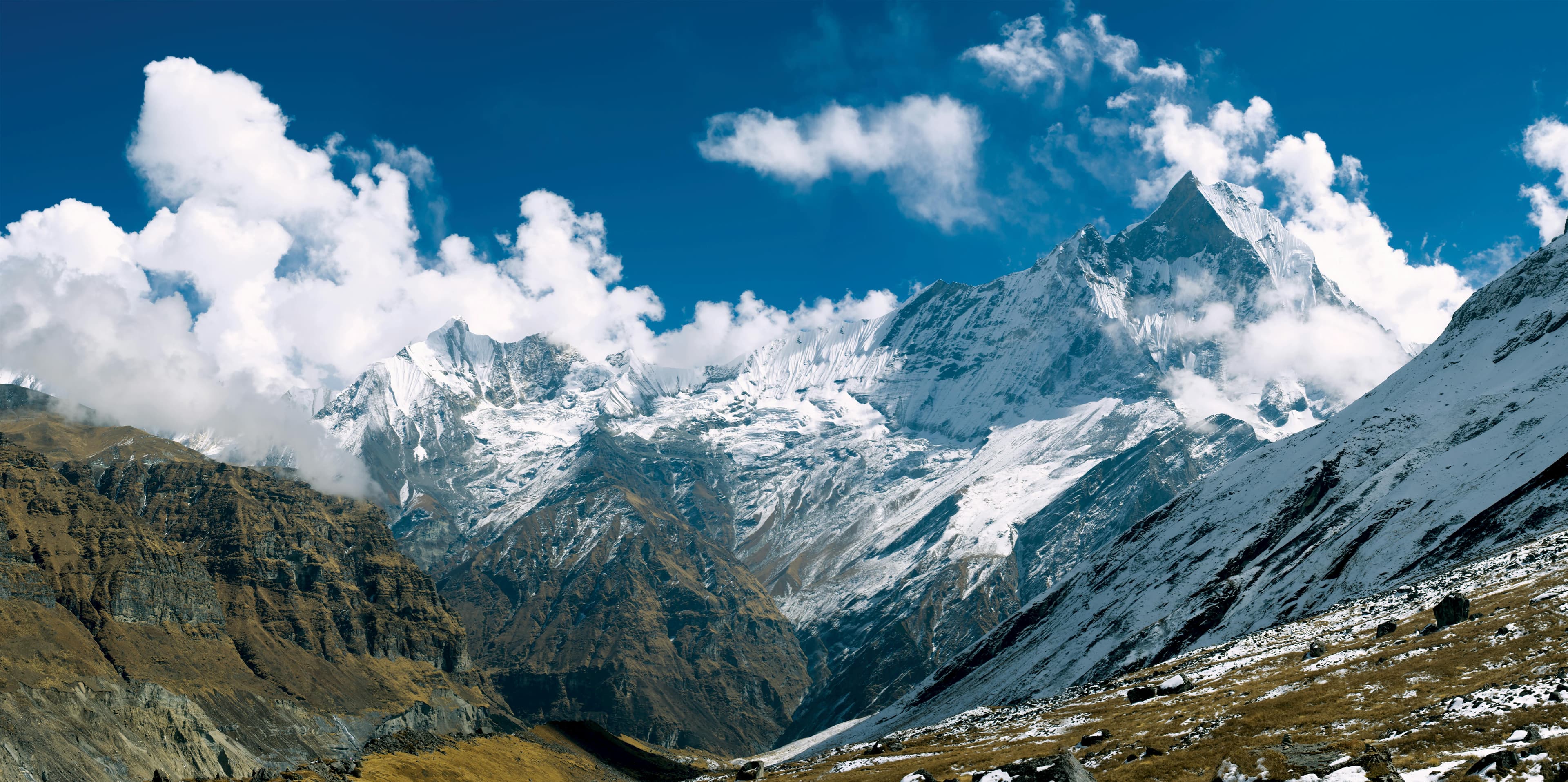
Kusum Kanguru (6,367 m / 20,889 ft) is one of the most challenging and spectacular climbing peaks in Nepal's Khumbu region. Rising between the Hinku and Dudh Koshi valleys within the Mahalangur Himal range, the mountain is renowned for its dramatic ridges, steep faces, and distinctive three-summit profile. Its remote location and demanding terrain make it an outstanding objective for experienced mountaineers seeking a true Himalayan alpine adventure.
Although classified as a trekking peak by the Nepal Mountaineering Association, Kusum Kanguru is widely recognized as one of Nepal's most technically demanding climbing peaks. The ascent is recommended for experienced mountaineers with previous alpine climbing experience, excellent physical fitness, and confidence on steep snow, ice, and rock terrain. Climbers should be proficient in the use of crampons, ice axes, fixed ropes, and other technical climbing equipment, as mountain conditions can vary significantly throughout the season.
The expedition approaches the mountain through the beautiful Hinku Valley, following quiet trails beneath towering Himalayan peaks before reaching the remote alpine environment of Kusum Kanguru Base Camp. As the route gains elevation, forests and alpine meadows gradually give way to glaciers, rugged moraines, and high mountain ridges, creating a true expedition atmosphere far from the busier trails of the Everest region.
A successful ascent depends on careful acclimatization, favorable weather, and strong teamwork. The climb involves sustained technical sections on rock, snow, and ice, demanding sound judgment, efficient climbing skills, and a disciplined approach throughout the expedition. Reaching the summit rewards climbers with breathtaking panoramic views of Everest, Lhotse, Makalu, Ama Dablam, Mera Peak, and countless surrounding Himalayan giants.
Kusum Kanguru is an exceptional choice for experienced climbers looking to test their skills on one of Nepal's finest alpine peaks. Combining technical climbing, remote wilderness, and outstanding Himalayan scenery, it offers an authentic and highly rewarding mountaineering experience in the heart of the Khumbu region.
Arrival at Tribhuwan International Airport. Our Staff member meets you and transfers you to the hotel.
Overnight at the hotel.
After breakfast at the hotel, our guide will meet you at the hotel and provide a briefing about the upcoming trek, including the itinerary, safety information, and important preparations. He will also assist you with all the necessary trekking formalities and paperwork.
After the briefing, we will go on a sightseeing tour around the Kathmandu Valley, visiting famous UNESCO World Heritage Sites such as Boudhanath Stupa, one of the largest Buddhist stupas in the world, and Swayambhunath Stupa, also known as the Monkey Temple. On this day, we will also arrange the TIMS card and other required permits for the trek.In the evening, you will have time to prepare your trekking gear and make the final arrangements for the journey ahead. Overnight at the hotel.
After an early breakfast, we will fly from Kathmandu (1,400 m / 4,600 ft) to Lukla (2,840 m / 9,317 ft). The short 35-minute flight offers spectacular views of the Himalayas, and landing on the dramatic hillside airstrip is an adventure in itself, surrounded by towering peaks and deep valleys. Upon arrival, we step into the heart of the Everest region, where the crisp mountain air and rugged landscapes signal the beginning of our journey.
From Lukla, we begin our trek along a quieter and less crowded trail, gradually ascending through beautiful forests of pine and rhododendron. Leaving the main Everest Base Camp route, we head into a more remote valley, crossing small streams and passing occasional yak pastures along the way. The trail offers scenic views of surrounding peaks, including Kusum Kanguru, as we steadily gain altitude.
After several hours of trekking, we reach Chutanga (3,450 m / 11,319 ft), a peaceful and isolated grazing area nestled in the forest. The trek covers approximately 6–7 km (3.5–4.5 miles) and takes around 4–5 hours. Chutanga provides a quiet and ideal setting for acclimatization before heading towards higher elevations. Overnight stay at a teahouse in Chutanga.
Note: The weather in Lukla is highly unpredictable. Occasionally, flights may be delayed or canceled due to adverse weather conditions. If a flight is canceled, you will need to return to your hotel in Kathmandu. Please note that transportation back to the hotel and accommodation for this night are not included. If the weather clears the next day, you will be accommodated on either the 3rd or 4th flight to Lukla. If conditions remain unfavorable, there is also an option to take a helicopter flight. The cost of a helicopter flight is not fixed and will be quoted by the airline on the same day. You should expect to pay an additional approx. 250 USD for the helicopter transfer from Kathmandu to Lukla. Although such situations are rare, we believe it is important to inform you in advance.
From Chutanga, we begin our trek after breakfast with a steady climb through alpine forest and open grazing areas. The trail gradually ascends through rhododendron and juniper vegetation, becoming steeper as we gain altitude. As we move higher, the tree line begins to fade, revealing wider views of the surrounding mountains and valleys.
Leaving the forest behind, we continue along a rugged hillside trail beneath the Kongma La region. The landscape becomes more open and windswept, with yak pastures and rocky terrain along the way. The air grows thinner as we steadily gain elevation, and the scenery becomes increasingly dramatic, with views of peaks like Kusum Kanguru in the distance.
After several hours of trekking, we reach Thuli Kharka (4,300 m / 14,108 ft), a wide high-altitude grazing area surrounded by mountains. The trek covers approximately 5 – 6 km (3 – 3.7 miles) and takes about 4 – 5 hours. Thuli Kharka is a peaceful stop and an important place for acclimatization before heading toward higher passes. Overnight stays at a teahouse in Chutanga.
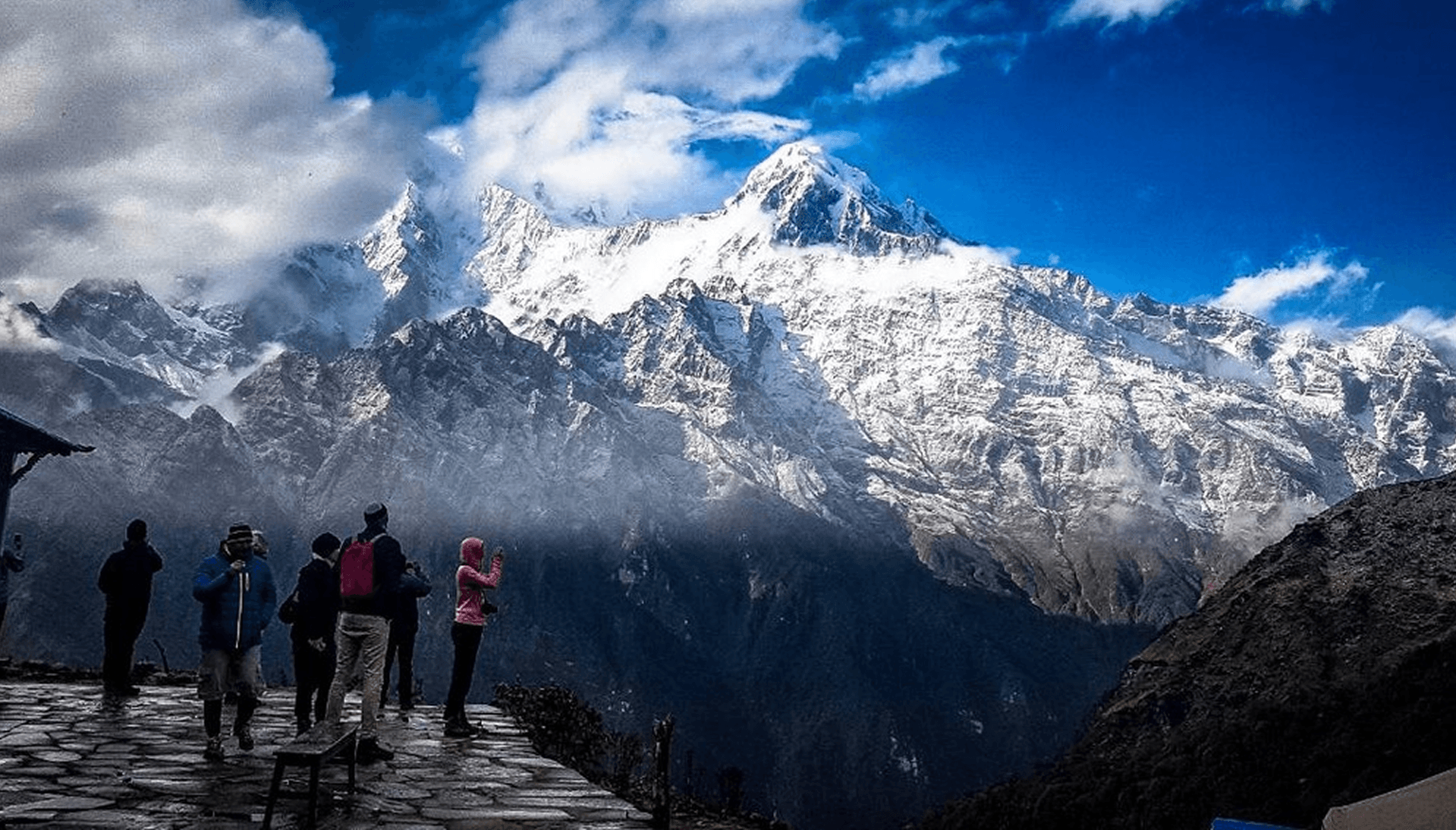
From Thuli Kharka, we begin our day with a gradual ascent towards the Zatrwa La Pass (4,610 m / 15,125 ft), the highest point of the day. The climb is steady but rewarding, offering stunning panoramic views of the Everest region, including distant peaks such as Mount Everest, Lhotse, and Makalu on clear days. Prayer flags flutter at the pass, marking this scenic and significant crossing.
After spending some time at the top, we begin a long and steep descent into the Hinku Valley. The trail drops through rocky terrain before gradually entering alpine meadows and then forested sections of pine and rhododendron. As we descend, the air becomes warmer and richer in oxygen, and the landscape shifts to greener surroundings with flowing streams and small bridges along the way.
Continuing downhill, we follow the Hinku Khola river until we reach Kothe (3,600 m / 11,811 ft), a small settlement nestled beside the river. The trek covers approximately 7 – 8 km (4.3–5 miles) and takes around 6 – 7 hours due to the pass crossing and long descent. Kothe offers basic teahouses and a peaceful riverside setting, making it a comfortable stop after a demanding day. Overnight stays at a lodge in Kothe.
Leaving Kothe (3,600 m / 11,811 ft) behind, we follow the trail along the Hinku Khola, gradually ascending deeper into the remote Hinku Valley. The path is well-defined and mostly gentle at the beginning, making for a comfortable trekking section as we move through dense pine forests, moss-covered rocks, and open yak pastures. The constant sound of the river and the peaceful surroundings create a calm trekking atmosphere.
As we continue, the valley slowly widens and the vegetation becomes more sparse. The terrain shifts into a more alpine environment with rocky sections and glacial landscapes beginning to appear. Along the way, we pass small seasonal settlements such as Gondishung and Lungsumgba, known for their ancient mani walls and spiritual significance. On clear days, we may also catch distant views of Mera Peak rising above the valley.
After a gradual ascent, we reach Thangnak (4,358 m / 14,298 ft), a small settlement located just below the Mera Glacier. The trek covers approximately 6 – 7 km (3.7 – 4.3 miles) and takes around 4 – 5 hours depending on pace and conditions. Surrounded by rugged peaks and glacial terrain, Thangnak is an important acclimatization stop before moving higher into the Mera region. Overnight at a teahouse in Thangnak.
At Thangnak (4,358 m / 14,298 ft), we spend an acclimatisation day to allow the body to adjust to the increasing altitude before moving higher into the Mera region. This rest day is essential for reducing the risk of altitude sickness and improving overall trekking performance.
After a relaxed breakfast, we take short hikes around the surrounding hills and glacial moraine areas. These gradual ascents help stimulate acclimatisation while offering stunning views of the nearby peaks, including Mera Peak and the surrounding Himalayan landscape. The terrain here is rugged and dramatic, with glaciers, rocky slopes, and open alpine valleys all around.
We return to Thangnak for lunch and spend the afternoon resting, hydrating, and preparing gear for the upcoming higher-altitude section of the trek. The village itself is small and quiet, consisting of basic teahouses set against a backdrop of towering mountains. Overnight at a teahouse in Thangnak.
Departing from Thangnak, we set out towards Kusum Kanguru Base Camp, gradually entering a more rugged and glacial alpine environment. The trail begins with a steady ascent over rocky moraine and glacial terrain, where the landscape becomes increasingly barren and dramatic as we leave the Hinku Valley behind.
Progressing higher, the route becomes more demanding with loose scree slopes, icy sections, and glacial streams that require careful footing and steady pacing. As we move closer, the towering south face of Kusum Kanguru dominates the skyline, revealing its steep ridges and technical climbing lines.
After a sustained climb through remote high-altitude terrain, we reach Kusum Kanguru Base Camp (approximately 4,900 m / 16,076 ft). The trek covers around 6 – 8 km (3.7–5 miles) and takes approximately 5–6 hours depending on weather and trail conditions. The base camp is located in a dramatic glacial basin surrounded by ice, rock, and steep mountain walls, offering a true expedition-style setting. Overnight stays at tented camp in base camp.
Leaving Kusum Kanguru Base Camp (approximately 4,900 m / 16,076 ft), we begin the ascent towards High Camp through increasingly steep and technical alpine terrain. The route starts across rocky moraine and glacial sections, where careful footing is required due to loose stones and uneven ground.
As we gain altitude, the trail becomes steeper and more exposed, with sections of mixed snow and ice depending on the season. The surroundings grow more dramatic, with close-up views of the towering ridges and ice walls of Kusum Kanguru, showcasing its challenging climbing lines.
After a steady and demanding climb, we reach Kusum Kanguru High Camp (approximately 5,400 m / 17,716 ft). The trek covers around 2 – 3 km (1.2 – 1.8 miles) and takes approximately 3 –4 hours, depending on snow conditions and acclimatisation pace. High Camp is located on a narrow alpine ridge with limited space, offering a striking but exposed setting for preparation before the summit push. Overnight at tented camp in High Camp.
From Kusum Kanguru High Camp (approximately 5,400 m / 17,716 ft), we continue the ascent towards Advanced High Camp, moving into a more exposed and technical section of the mountain. The route begins over steep scree and mixed snow terrain, where footing becomes more demanding and progress is slower due to the altitude.
As we climb higher, the terrain transitions into firmer snow and icy slopes, requiring careful movement and steady pacing. The surrounding environment becomes increasingly dramatic, with close views of the glaciated ridges and steep faces of Kusum Kanguru, highlighting the challenging nature of the climb.
After a short but intense ascent, we reach Kusum Kanguru Advanced High Camp (approximately 5,650 m / 18,537 ft). The trek covers around 1.5–2.5 km (0.9–1.5 miles) and takes approximately 2–3 hours, depending on snow and weather conditions. This high, exposed camp is used for final preparation before the summit push. Overnight at tented camp in Advanced High Camp.
From Kusum Kanguru Advanced High Camp (approximately 5,650 m / 18,537 ft), we begin the summit push in the early hours of the morning, typically before sunrise. The climb starts on steep snow and ice slopes, requiring fixed ropes and careful movement as we gain altitude in cold and thin air.
As we ascend higher, the route becomes more technical, with mixed rock and ice sections leading towards the summit ridge. The exposure increases significantly, and progress is slow and steady due to the altitude and challenging terrain. Throughout the climb, we are rewarded with increasingly wide Himalayan views, including surrounding peaks and glaciers of Kusum Kanguru.
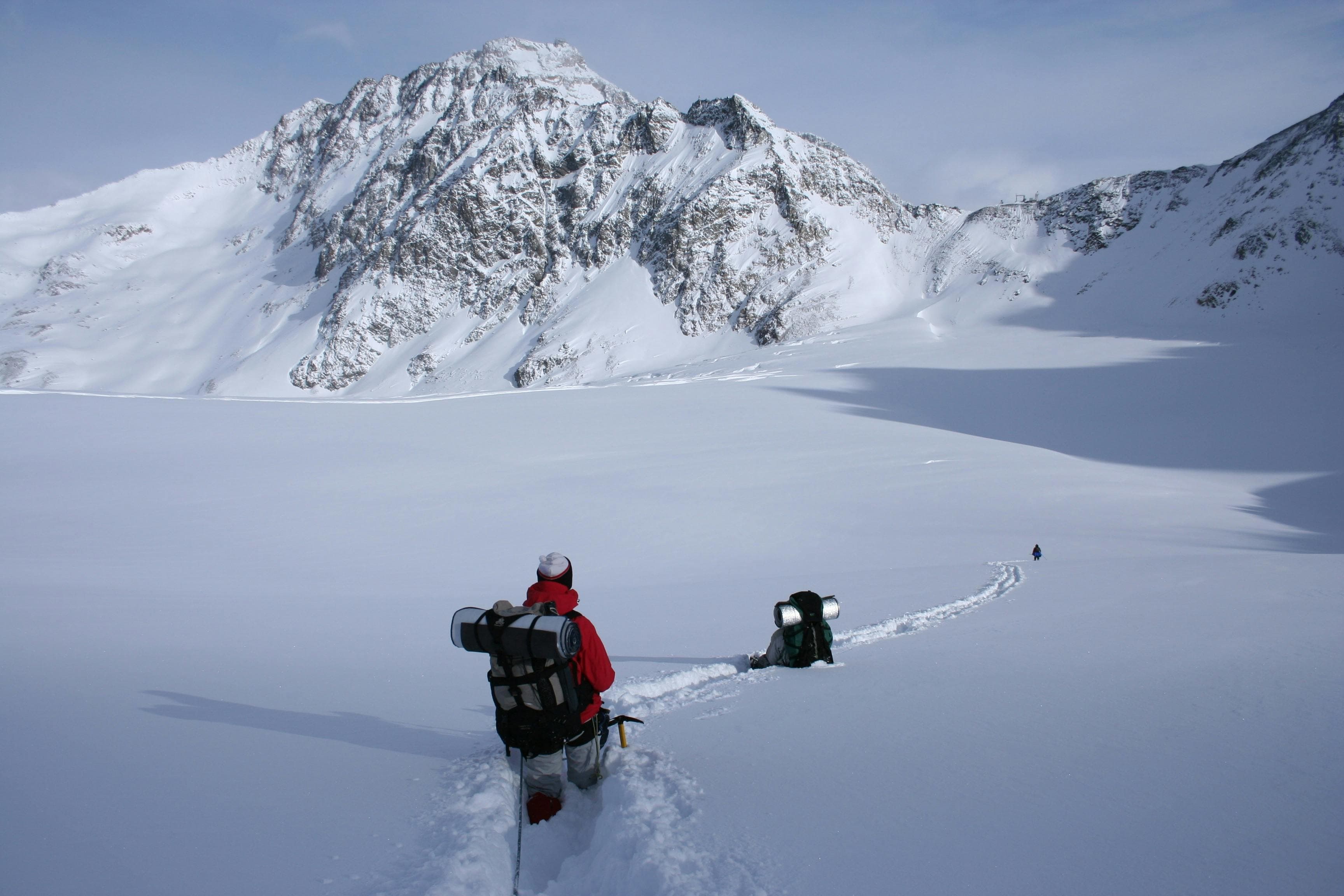
After several hours of sustained climbing, we reach the summit of Kusum Kanguru (6,367 m / 20,889 ft). From the top, we enjoy panoramic views of the Hinku Valley and surrounding Himalayan ranges. After a short celebration and photo stop, we begin the careful descent back down the same route.
Retracing our steps, we descend from the summit to Advanced High Camp (5,650 m / 18,537 ft) and continue further down to High Camp (approximately 5,400 m / 17,716 ft), depending on conditions and team strength. The full round trip typically covers around 5 – 7 km (3.1 – 4.3 miles) and takes approximately 8 – 12 hours in total. Overnight at High Camp or descent further if conditions allow.
Leaving Kusum Kanguru High Camp (approximately 5,400 m / 17,716 ft), we begin a long descent back into the Hinku Valley. The route initially follows steep alpine slopes and glacial terrain, where careful footing is required as we lose altitude on loose scree and icy sections.
As we descend further, the landscape gradually softens, transitioning from high, barren mountain terrain into moraine fields and then alpine meadows. The air becomes noticeably thicker as we drop in elevation, and the surroundings shift back toward greener valleys. The towering peaks of Kusum Kanguru slowly recede behind us.
Continuing downhill for several hours, we re-enter the upper Hinku Valley and follow the river trail through familiar terrain until we reach Kothe (3,600 m / 11,811 ft). The trek covers approximately 10 – 12 km (6.2 – 7.5 miles) and takes around 6 – 8 hours depending on trail conditions and pace. Kothe offers a comfortable rest stop with teahouses, marking a significant return to lower altitude. Overnight at a lodge in Kothe.
Setting out from Kothe, we begin a steady ascent back into the upper reaches of the Hinku Valley. The trail initially follows the river through dense pine and rhododendron forest, offering a calm and scenic walking section with flowing water and occasional wildlife sounds.
As we gain elevation, the forest gradually gives way to open alpine terrain. The valley widens, and the path becomes more exposed with yak pastures, rocky slopes, and scattered glacial streams. The climb is gradual but continuous, requiring a steady rhythm as we regain altitude. Glimpses of surrounding Himalayan peaks appear intermittently as the landscape opens up.
After several hours of trekking, we reach Thuli Kharka (approximately 4,300 m / 14,108 ft), a wide high-altitude grazing area surrounded by rugged mountains. The trek covers around 7 – 8 km (4.3–5 miles) and takes approximately 5 – 6 hours depending on conditions and pace. Thuli Kharka serves as an important stop before crossing the high pass back toward the Lukla region. Overnight at a lodge or tented camp in Thuli Kharka.
Traversing from Thuli Kharka, we begin the final major descent of the journey by crossing the high ridge of Zatrwa La Pass (4,610 m / 15,125 ft). The climb to the pass is steady but demanding due to altitude, with rocky terrain and often windy conditions. From the top, we are rewarded with wide panoramic views of the surrounding Himalayan ranges before beginning the long descent.
After the pass, the trail drops steeply into alpine slopes and gradually transitions into lower meadows and forested areas. The descent is long and continuous, requiring careful footing on loose sections and switchbacks. As we lose elevation, the air becomes richer, and the landscape turns greener with rhododendron and pine forests reappearing along the way. In the distance, glimpses of the lower valleys and settlement areas become visible.
Continuing downhill for several hours, we pass through Chutanga and other familiar sections of the trail before finally reaching Lukla (2,840 m / 9,317 ft). The trek covers approximately 10 – 12 km (6–7.5 miles) and takes around 7 – 9 hours depending on weather, trail conditions, and pace. Arrival in Lukla marks the completion of the trekking circuit, with time to rest and reflect on the journey.
After breakfast, we make our way to Lukla (2,840 m / 9,317 ft) airport for our return flight to Kathmandu. Depending on weather conditions, the short mountain flight of about 30–35 minutes offers one last spectacular aerial view of the Himalayas, deep valleys, and scattered mountain villages.
As we descend from the highlands, the landscape gradually transforms from rugged peaks to rolling hills and terraced fields, marking our exit from the Everest region. The flight lands at Kathmandu (1,400 m / 4,593 ft), where the busy city atmosphere contrasts sharply with the peaceful mountain trails we have just completed.
Upon arrival, you will be transferred to your hotel. The remainder of the day is free to relax, rest, or explore Kathmandu at your own pace, reflecting on the incredible journey through the Himalayas.
Today marks the end of your trekking and climbing journey in the Himalayas. Depending on your flight schedule, you will be transferred from your hotel in Kathmandu (1,400 m / 4,593 ft) to Tribhuvan International Airport for your onward journey.
As you leave Nepal, this is a meaningful moment to reflect on the remarkable adventure crossing high mountain passes, exploring remote valleys, and experiencing the grandeur of peaks such as Kusum Kanguru and the surrounding Himalayas. The journey has offered a unique blend of natural beauty, cultural encounters, and personal achievement.
With unforgettable memories of the mountains, safe travels accompany you as you depart from Nepal, carrying the spirit of the Himalayas with you.