

Arrival at Tribhuwan International Airport. Our Staff member meets you and transfers you to the hotel.
Overnight at the hotel.
Dolpo Region

Trek Starting Point
Jhupal

Trek Ending Point
Jhupal

Departure From
Kathmandu

Transportation
Domestic flight

Style
Hiking and Trekking

Meal
Breakfast, Lunch, Dinner

Accommodation
Tourist standard hotel in Kathmandu, Teahouse during trek
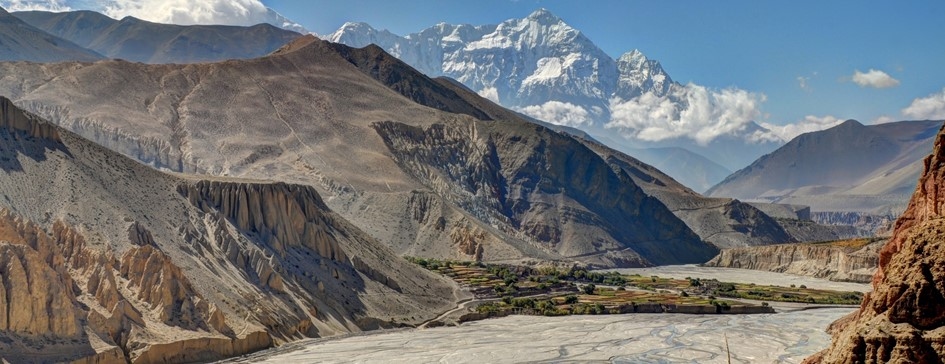
Upper Dolpo is one of Nepal's last great Himalayan wildernesses, where dramatic high-altitude landscapes, ancient Tibetan culture, and centuries-old traditions remain remarkably preserved. As a restricted trekking region in the far west of Nepal, Upper Dolpo offers a rare opportunity to explore one of the Himalayas' most isolated and culturally authentic destinations, far from the country's more frequented trekking trails.
The trail winds through remote valleys, traditional stone villages, and expansive alpine landscapes that have remained largely unchanged for generations. Along the route, ancient monasteries, prayer walls, and Tibetan Buddhist traditions reveal a way of life deeply rooted in the mountains. The journey also includes two of Dolpo's most iconic landmarks: the magnificent Shey Phoksundo Lake, renowned for its crystal-clear turquoise waters, and the sacred Shey Gompa, one of the region's oldest and most revered monasteries.
One of the defining highlights of the Upper Dolpo Trek is crossing three spectacular high mountain passes: Nagdalo La Pass (5,360 m), Sela La Pass (5,095 m), and Chhoila La Pass (5,051 m). These demanding crossings reward trekkers with breathtaking panoramas of snow-covered peaks, remote valleys, and the rugged trans-Himalayan landscapes that define the beauty of Upper Dolpo.
Beyond its dramatic scenery, Upper Dolpo offers an experience shaped by solitude, cultural heritage, and true wilderness. With limited visitor numbers, preserved traditions, and landscapes largely untouched by modern development, the region has retained an authenticity that is becoming increasingly rare in the Himalayas.
Upper Dolpo Trek is a demanding yet deeply rewarding adventure for those seeking more than a conventional trekking experience. Combining remote mountain landscapes, rich Tibetan heritage, and spectacular alpine scenery, it stands among Nepal's finest trekking expeditions, offering an unforgettable journey through one of the country's most extraordinary and least-explored regions.
Arrival at Tribhuwan International Airport. Our Staff member meets you and transfers you to the hotel.
Overnight at the hotel.
After breakfast at the hotel, our guide will meet you at the hotel and provide a briefing about the upcoming trek, including the itinerary, safety information, and important preparations. He will also assist you with all the necessary trekking formalities and paperwork.
After the briefing, we will go on a sightseeing tour around the Kathmandu Valley, visiting famous UNESCO World Heritage Sites such as Boudhanath Stupa, one of the largest Buddhist stupas in the world, and Swayambhunath Stupa, also known as the Monkey Temple. On this day, we will also arrange the TIMS card and other required permits for the trek.In the evening, you will have time to prepare your trekking gear and make the final arrangements for the journey ahead. Overnight at the hotel.
After an early breakfast, we will take a scenic flight from Kathmandu (1,400 m / 4,600 ft) to Nepalgunj (150 m / 492 ft), a vibrant gateway city in Nepal’s western plains. The flight, lasting approximately 50 – 60 minutes, offers beautiful aerial views of rolling hills, winding rivers, and the vast Terai landscape stretching toward the horizon. On clear days, distant Himalayan peaks provide a stunning backdrop throughout the journey.
As we descend into Nepalgunj, the scenery shifts dramatically from the cool hills of Kathmandu to the warm subtropical plains below. Upon arrival, we will transfer to our hotel and spend the night in Nepalgunj, allowing time to relax and experience the city’s lively atmosphere and unique cultural blend before continuing our journey into western Nepal. Overnight stay at a hotel.
After an early breakfast, we will take a spectacular 35 minute flight from Nepalgunj to Jhupal (2,475 m / 8,120 ft), the gateway to the remote Dolpo region. The flight offers breathtaking aerial views of western Nepal’s rugged hills, deep valleys, and snow-capped Himalayan peaks, providing an unforgettable start to the journey.
Upon landing at the small mountain airstrip in Jhupal, we will begin our trek toward Dunai (2,140 m / 7,020 ft), which takes approximately 3 – 4 hours. The trail descends gradually through terraced fields, traditional villages, and pine forests, following the scenic Thuli Bheri River along the way. By late afternoon, we arrive in Dunai, a peaceful Himalayan town where we will spend the night surrounded by the natural beauty and tranquility of the Dolpo region. Overnight stay at a teahouse.
We begin our journey from Dunai (2,140 m / 7,020 ft) and set out toward Chhepka (2,720 m / 8,924 ft), a trek of approximately 5 to 6 hours. The trail follows the Thuli Bheri River, gradually leaving the small administrative town behind as we enter a quieter stretch of valley lined with forested hills and scattered farmland.
Along the way, we pass through several small riverside settlements such as Sulighat and Rupgad, where traditional stone houses, small teahouses, and suspension bridges offer brief glimpses of local life. The trail also passes the entrance checkpoint area of Shey Phoksundo National Park, marking the transition into one of Nepal’s most protected and remote regions.
As the journey continues, the path gently ascends through pine forests and river bends, with the sound of the Thuli Bheri accompanying much of the walk. By afternoon, we arrive at Chhepka, a quiet settlement surrounded by green hills and dense forest, offering a peaceful resting place before continuing deeper into the Phoksundo region. Overnight stay at teahouse.
We leave Chhepka (2,720 m / 8,924 ft) and continue our journey toward Jarana Hotel, a trek of approximately 4 to 6 hours. The trail follows the Phoksundo Khola through dense pine and cedar forests, staying close to the river as we gradually move deeper into the valley.
Soon after leaving Chhepka, we cross Suligad Bridge, an important landmark that marks the gateway into Shey Phoksundo National Park. From here, the surroundings become noticeably more remote, with fewer settlements and increasingly wild forested terrain. The route continues through shaded paths, gentle ascents, and river-side walking, with the sound of flowing water accompanying much of the journey.
Along the way, we pass Rechi (2,940 m), a small scenic settlement and an important resting point used by trekkers and mule caravans on the Phoksundo route. As the valley narrows further into forested slopes, we reach Jarana Hotel by afternoon, a simple mountain lodge set in a quiet natural setting, offering a peaceful stop before continuing toward Phoksundo Lake. Overnight stay at a teahouse.
Departing from Jharana Hotel, we make our way toward Ringmo village (3,640 m / 11,942 ft), a short but scenic trek of approximately 3 to 4 hours. The trail gradually ascends through pine and juniper forests, with rocky sections and open stretches that begin to reveal the dramatic landscapes of the Phoksundo region.
Along the route, occasional viewpoints open up to distant cliffs and alpine scenery, offering a first glimpse of the wider lake basin as we approach higher ground. The atmosphere becomes noticeably quieter and more pristine, with the trail gently transitioning into the upper valley environment.
By late morning or early afternoon, we arrive at Ringmo village (3,600 m / 11,811 ft), a traditional settlement situated just above the shores of Phoksundo Lake. With its stone-built houses, prayer flags, and strong Tibetan Buddhist heritage, Ringmo offers a peaceful and culturally rich introduction to one of Nepal’s most iconic alpine lakes. Overnight stay at tented camp near Phoksundo.
Today is reserved for exploration and acclimatization at Phoksundo Lake (3,640 m / 11,942 ft), allowing time to experience one of Nepal’s most breathtaking alpine landscapes at a relaxed and immersive pace. The morning begins in Ringmo village, where traditional stone houses, prayer flags, and the surrounding cliffs reflect the deep Tibetan Buddhist culture of the region.
A visit to Tshowa Gompa, an ancient monastery believed to be around 900 years old, offers a meaningful insight into the spiritual heritage of Dolpo. Located above the village, this sacred site remains an important place of worship for the local community and adds strong cultural depth to the journey.
Later, a short hike takes us to a viewpoint above Phoksundo Lake, where we are rewarded with sweeping views of its striking turquoise waters set against dramatic cliffs and barren alpine slopes. The contrast of colors and scale makes this one of the most unforgettable sights in the entire Dolpo region.
The rest of the day is free for lakeside walks, photography, and quiet reflection in this serene high-altitude setting. Overnight stay at tented camp or lodge near Phoksundo Lake.
Today's trek takes us from Ringmo Gaon (3,600 m / 11,811 ft) to Phoksundo Khola Camp (3,750 m / 12,303 ft), a journey of approximately 5 to 6 hours. The trail follows the western shoreline of the magnificent Phoksundo Lake, offering spectacular views of its turquoise waters, dramatic cliffs, and the rugged peaks that surround the valley.
As we progress along the lakeside path, the route traverses a series of rocky ledges and narrow sections carved into the mountainside, making for one of the most scenic stretches of the trek. After reaching the northern end of the lake, we pass through Tsola Phu (3,630 m), a seasonal grazing area where local herders bring their livestock during the warmer months.
Beyond Tsola Phu, the trail follows the Phoksundo Khola upstream through an increasingly remote alpine landscape of open valleys, glacial terrain, and sparse vegetation. By afternoon, we arrive at Phoksundo Khola Camp, a peaceful riverside campsite surrounded by dramatic mountain scenery and pristine wilderness. Overnight stay at camp.
Leaving Phoksundo Khola Camp (3,750 m / 12,303 ft), we begin our trek by ascending the narrow trail that follows the Tuk Kyaksa River toward Pass Camp (4,717 m / 15,476 ft), a journey of approximately 5 to 6 hours. The route gradually climbs through a rugged alpine landscape, where the river cuts through a deep valley framed by steep slopes and rugged Himalayan ridges.
As we gain elevation, the terrain becomes increasingly barren and remote, with snowmelt streams, glacial deposits, and wide-open views of the surrounding ridgelines defining the landscape. The steady ascent offers a strong sense of wilderness and isolation, characteristic of Upper Dolpo.
By afternoon, we arrive at Pass Camp, situated beneath Nagdalo La Pass (5,350 m). Surrounded by rugged Himalayan ridges and expansive high-mountain scenery, this high-altitude campsite provides an important resting point before crossing the pass the following day. Overnight stay at camp.
From Pass Camp (4,717 m / 15,476 ft), we set out on a demanding trek toward Shey Gompa (4,343 m / 14,250 ft), crossing the high point of the journey via Nagdalo La Pass (5,360 m / 17,585 ft). This is a challenging yet highly rewarding day, with a total trekking time of approximately 7 to 8 hours.
We begin with a steady and sustained ascent toward Nagdalo La Pass, moving through a stark high-altitude landscape of loose scree, frozen streams, and rugged Himalayan ridges. As we climb higher, the air becomes thinner and the views open up into sweeping panoramas of remote valleys and distant ridgelines.
After reaching Nagdalo La Pass, we begin a long descent into the Shey region, dropping into the valley of the Hubaiung Khola. The trail winds down through rocky slopes and glacial terrain, following the river corridor as the landscape gradually softens into a broader alpine valley.
Continuing along the Hubaiung Khola, we make our way toward the sacred Shey region, surrounded by dramatic cliffs and vast wilderness. By afternoon, we arrive at Shey Gompa (4,343 m), a historic monastery nestled in an isolated and spiritually significant mountain setting. Overnight stay at lodge/monastery guesthouse.
We leave Shey Gompa (4,343 m / 14,250 ft) and head toward Namgung Gompa (4,360 m / 14,305 ft), crossing the high Sela La Pass (5,095 m / 16,715 ft). This demanding 6 to 7 hour trek passes through one of the most remote and spiritually significant sections of Upper Dolpo within Shey Phoksundo National Park.
The ascent to Sela La unfolds through a stark alpine landscape of rocky ridges and wind-swept slopes. From the summit, expansive views reveal layered mountain ranges and deep, silent valleys that emphasize the raw isolation of the region.
The descent leads into a wide, bowl-shaped canyon, where the trail winds through barren terrain shaped by glaciers and time, gradually softening as it approaches a more sheltered valley.
By afternoon, we arrive at Namgung Gompa (4,360 m), a peaceful monastery settlement beneath towering cliffs. Rich in spiritual heritage and set in a dramatic mountain environment, it offers a calm resting place after the high pass crossing. Overnight stay at lodge/monastery guesthouse.
Today we depart Namgung Gompa (4,360 m / 14,305 ft) and descend toward Saldang (3,770 m / 12,370 ft), a trek of approximately 4 to 5 hours through the remote highlands of Upper Dolpo.
The trail leaves the monastery settlement and gradually drops into a dry, eroded river corridor, where winding paths cut between barren hills and wind-shaped slopes. As we continue descending, the scenery slowly opens up, revealing a vast high-altitude desert landscape with distant ridgelines, wide valleys, and a profound sense of isolation that defines this region.
Along the way, we pass small stone settlements, mani walls, and chortens that reflect the deep Tibetan-influenced culture preserved in these remote mountains. Life appears simple yet deeply rooted in tradition, blending harmoniously with the harsh environment.
By afternoon, we arrive at Saldang (3,770 m), one of the largest and most significant villages in Upper Dolpo, set on a high plateau above the Nam Khong River. With its cluster of traditional houses and strong cultural heritage, it offers a rare glimpse into a way of life that has remained unchanged for centuries. Overnight stay at camp.
Today is set aside as an acclimatisation day in Saldang (3,770 m / 12,370 ft), giving the body valuable time to adjust to the thinner air of the high Himalayas in Upper Dolpo. This gradual adaptation is an essential part of the journey, helping trekkers prepare for higher elevations ahead while minimizing altitude-related discomfort.
The day is spent exploring Saldang at a slow and mindful pace. As one of the most significant settlements in Upper Dolpo, the village is marked by traditional stone-built homes, intricately carved mani walls, and sacred chortens that highlight its deep-rooted Tibetan Buddhist heritage. Life here moves at a measured rhythm, and the surrounding landscape adds to its remote beauty, with wide, arid valleys, dry terraced slopes, and distant snow-lined ridges forming a striking Himalayan backdrop.
In the afternoon, a hike is made to Yangjer Gumba, an important monastery perched high above the valley at around 4,500–4,600 meters. The ascent offers increasingly expansive views over the Nam Khong Valley and the surrounding mountain ranges, making it both a physical and spiritual highlight of the day. The remainder of the day is kept free for rest, photography, and meaningful interaction with local communities, before returning to camp for an overnight stay.
After breakfast, we begin our trek from Saldang, setting out on a full-day journey of approximately 5 – 6 hours into the remote landscapes of Upper Dolpo. We gradually leave behind the ancient village and ascend into a vast, windswept terrain where settlements fade away and the silence of the high Himalayas takes over.
As we continue, the trail leads us across open ridges and high alpine terrain, following traditional paths used by local communities for generations. The scenery is raw and expansive, with stone cairns, prayer flags, and wide mountain views accompanying us throughout the climb. The highlight of the day is the crossing of the high ridge pass, where we pause to take in sweeping panoramas of the surrounding Himalayan ranges before beginning our descent.
We then descend steadily toward Khoma (4,060 m), a quiet and remote settlement nestled beneath the surrounding slopes. Upon arrival, we settle into the peaceful rhythm of village life, concluding a rewarding day of trekking through one of Nepal’s most isolated and beautiful regions. Overnight stay at a camp.
After an early breakfast, we begin our journey from Khoma (4,060 m), setting out on a scenic high-altitude trek of approximately 5 – 7 hours through the remote landscapes of Upper Dolpo. We gradually leave the village behind and enter a vast alpine world of open ridges, windswept slopes, and quiet mountain solitude.
As we continue, the trail steadily climbs toward Shimen La Pass (4,260 m), following traditional routes used by local herders across these high mountain corridors. The ascent is gradual but sustained, and from the pass we are rewarded with sweeping panoramic views of the surrounding valleys and rugged Himalayan terrain. This section of the trek also passes through wild and untouched habitats where, with a bit of luck, we may spot rare Himalayan wildlife such as blue sheep, and in the more remote and hidden corners of the region, even the elusive snow leopard.
From the pass, we begin our descent into quieter terrain, gradually making our way toward Shimen (3,850 m). The trail winds through open highland landscapes before reaching the settlement, where we settle into the peaceful rhythm of village life and conclude another remarkable day in one of Nepal’s most isolated and extraordinary mountain regions. Overnight stay at a camp.
After breakfast, we begin our trek from Shimen (3,850 m), setting out on a scenic 5 – 6 hour journey toward Tinje (4,110 m). The trail leads us through the vast and open landscapes of Upper Dolpo, following ancient highland routes used for centuries by traders and local communities.
As we continue, we gradually descend and traverse alongside the Panjyan Khola, a remote mountain stream that guides our way through this isolated valley system. The scenery is dramatic and untouched, with wide barren slopes, rugged cliffs, and distant snow peaks framing the horizon. En route, we also pass Shimen Gompa and Pu Gompa (4,010 m), an important spiritual site perched quietly in the highlands, offering a moment of rest and cultural insight.
From here, the trail continues toward the expansive valley of Tinje. By afternoon, we arrive in Tinje, one of the most significant settlements in the region, historically known as a trading hub along the trans-Himalayan salt routes. Upon arrival, we settle into the village and experience the calm rhythm of life in this remote Himalayan community. Overnight stay at a camp.
Today’s trek takes us toward Penjon Khola Dovan (4,480 m), on a journey of approximately 5 – 7 hours through the remote highlands of Upper Dolpo. From the beginning, we follow the trail alongside the Panjyan Khola, gradually entering a vast and untouched landscape shaped by high-altitude valleys and flowing mountain streams.
Along the route, we pass the small settlement of Chhamdang before continuing along the riverbank into increasingly open and rugged terrain. The trail then leads us toward the confluence of Chholtam Khola and Panjyan Khola, a dramatic meeting point of glacial-fed waters surrounded by expansive alpine scenery.
We continue further by crossing a bridge over Thalum Khola, eventually reaching the wide grazing grounds used seasonally by yak herders. This high alpine area is known as Yak Kharka, where we pause before proceeding onward to our overnight stop at Penjon Khola Dovan, a remote confluence campsite surrounded by raw Himalayan wilderness. Overnight stay at a camp.
After breakfast, we leave Yak Kharka and begin a challenging high-altitude trek of approximately 6 – 7 hours toward the remote village of Tokyu, deep in Upper Dolpo. The route starts with a bridge crossing over the Sulun Khola before gradually entering steeper and more exposed mountain terrain.
We then make a steady and sustained ascent toward Chhoila La North Pass (5,040 m), the most demanding section of the day. The climb takes around two hours, following rugged trails through high alpine slopes where the air becomes noticeably thinner and the landscape increasingly vast and open.
At the top of the pass, we pause to enjoy sweeping Himalayan views, including a distant sight of Tokyu tucked into the valley below. From here, we begin our descent, gradually making our way down to Tokyu. By afternoon, we arrive in the village and set up camp, concluding a rewarding day of high mountain trekking in one of Nepal’s most remote regions. Overnight stay at a Camp.
After breakfast, we set out from Tokyu on a short and pleasant trek of around 3 hours, gradually descending into the wide and sheltered valley of Dho Tarap (3,944 m). The trail is relatively gentle, allowing us to fully absorb the changing landscape as the rugged high mountains slowly open into a broader and more inhabited basin.
Upon arrival in Dho Tarap, we step into one of the most vibrant and culturally rich settlements of Upper Dolpo. The village is beautifully set amidst cultivated fields of barley, buckwheat, wheat, potatoes, and seasonal vegetables, all framed by towering Himalayan walls. Colorful prayer flags flutter across the valley, while chortens, mani walls, and monasteries are scattered throughout the settlement, creating a deeply spiritual atmosphere that reflects centuries of Tibetan Buddhist tradition.
The people of Dho Tarap preserve a distinct highland culture, often compared to the Khampa communities of Tibet, with unique attire and traditional ornaments that reflect their heritage. The village also gained wider recognition through Eric Valli’s film Caravan, which beautifully portrayed the ancient salt trade routes that once passed through this region. After settling in, we take time to explore the village surroundings and visit nearby monasteries such as Ribo Bumpa Monastery, Drakmar Dewa Monastery, Mekhyim Monastery, and Dhoro Monastery, each offering its own spiritual character and architectural charm. The day concludes with a deeper connection to both the landscape and living culture of this remarkable Himalayan valley. Overnight stay at a camp.
After breakfast, we depart from Dho Tarap and begin a long, scenic descent toward Nawar Pani, continuing through the deep river valleys of Upper Dolpo.
We initially follow a gentle and open trail, gradually moving toward the confluence of the Tarap Khola and Mirubabane Khola. From this junction, the route takes us across a bridge over the Klang Khola near Langa Camp, after which we continue downstream along the Tarap Khola. The further we progress, the more enclosed the valley becomes, revealing a dramatic corridor of steep cliffs, winding river channels, and untouched Himalayan wilderness.
On the way, we pass through the small settlements of Sisaul, Gyamghar, and Toltol, where life continues in its traditional rhythm despite the remoteness of the region. By afternoon, we reach Nawar Pani, where we establish our campsite and spend the night surrounded by the calm and raw beauty of the river valley. Overnight stay at teahouse.
After breakfast, we depart from Nawar Pani and begin our descent toward Laisicap, on a scenic journey of approximately 6 – 7 hours through the changing landscapes of the Tarap Valley in Upper Dolpo. As we move forward, the terrain gradually transforms, with green forests beginning to reappear and signal our transition into lower, more temperate regions.
The trail first leads us toward Lamchaur, a high point above the Tarap Khola, offering wide views of the river valley below. From here, we pass Laini Odar (3,370 m)and continue through a mix of gentle ascents and descents as the landscape becomes increasingly lush. The route then brings us to Chhedhul Gompa, an important monastery nestled along the valley, where we take a brief cultural pause before continuing onward.
Following the course of the Tarap Khola, we gradually descend through thicker vegetation and a narrowing valley corridor. By afternoon, we arrive at Laisicap, where we complete our trek and settle into the lower valley environment, marking the end of our journey through the remote heart of Dolpo. Overnight stay at a teahouse.
After breakfast, we begin our descent from Laisicap, setting out on a scenic trek of approximately 4 – 5 hours toward Dunai (2,140 m). Leaving the quiet river valley behind, we gradually enter more cultivated and inhabited surroundings as the trail follows the course of the Tarap Khola and eventually joins the larger river system leading toward the district headquarters.
As we continue, the landscape steadily transforms from narrow gorges and forested slopes into a more open valley environment. The trail winds through small settlements, terraced fields, and riverside paths, offering a gentle and relaxing walk compared to the higher sections of Upper Dolpo. The presence of vegetation, agricultural land, and human activity becomes more frequent, marking our gradual return toward lower elevations.
By afternoon, we arrive in Dunai, where we settle in for the night. The town provides a comfortable transition point, bridging the remote wilderness of Dolpo with more accessible regions, while still retaining its authentic Himalayan character. Overnight stay at a teahouse.
After breakfast, we begin our final stretch of the journey from Dunai (2,140 m), setting out on a gradual ascent of approximately 3 – 4 hours toward Juphal (2,475 m). Leaving the district headquarters behind, the trail follows a steady uphill path through the lower valleys of Dolpa, offering a gentle yet continuous climb.
As we move forward, the landscape transitions into terraced fields, scattered settlements, and forested ridges, reflecting the shift from remote trekking terrain to more inhabited and agricultural surroundings. The walk is relaxed compared to the high-altitude days, allowing time to reflect on the journey through Upper Dolpo as we gradually gain elevation toward the airstrip area.
By afternoon, we arrive in Juphal, a small hillside settlement overlooking the valley. Here, we conclude our trekking approach to the airstrip region, preparing for departure while enjoying the final views of the surrounding Himalayan foothills. Overnight stay at a teahouse.
After completing the Upper Dolpo Trek, we take a morning flight from Jhupal to Nepalgunj. This short flight offers one last view of the remote Dolpo valleys, deep gorges, and rugged Himalayan landscape as we descend toward the lowlands.
From Nepalgunj, we connect with our flight to Kathmandu. Flight schedules in this region are weather dependent, so short delays are possible before the onward connection. Once airborne, we fly east toward the capital, watching the landscape gradually change from flat Terai plains to green hills and finally the Kathmandu Valley.
On arrival in Kathmandu, we transfer to the hotel, marking the end of the journey. The trek concludes with lasting memories of remote villages, high passes like Nagdalo La, Sela La, and Chhoila La, and the stunning beauty of Shey Phoksundo Lake.
After an early breakfast, we will transfer to Tribhuvan International Airport in Kathmandu for your onward departure. The drive offers a final glimpse of the Kathmandu Valley, with its bustling streets, ancient temples, and surrounding green hills slowly fading into the background as the journey comes to a close.
Depending on your flight schedule, our team will ensure a smooth and timely transfer to the airport. This marks the end of your Upper Dolpo Trek, leaving you with lasting memories of the turquoise alpine lake, remote Himalayan trails, and the unique culture of the Dolpo region.