

Arrival at Tribhuwan International Airport. Our Staff member meets you and transfers you to the hotel.
Overnight at the hotel.
Kanchenjunga Region

Trek Starting Point
Sekathum

Trek Ending Point
Sekathum

Departure From
Kathmandu

Transportation
Domestic flight, Private Vehicle, Local Jeep

Style
Hiking and Trekking

Meal
Breakfast, Lunch, Dinner

Accommodation
Tea house / Tourist standard hotel in Kathmandu
The Kanchenjunga North Base Camp Trek is a remote and truly immersive adventure into the far eastern Himalayas of Nepal, leading to the base of Mt. Kanchenjunga (8,586 m), the world's third-highest mountain. This remarkable route lies within the protected Kanchenjunga Conservation Area, a region renowned for its dramatic contrasts, from subtropical river valleys and terraced hillsides to alpine forests and vast glacial landscapes.
The trail gradually leaves behind inhabited settlements and enters increasingly isolated mountain terrain, following the beautiful Ghunsa Valley as it climbs toward the high Himalayas. Traditional villages, Tibetan-influenced culture, and peaceful forest trails gradually give way to rugged moraine fields, ice-carved valleys, and a stark alpine landscape shaped by glaciers over thousands of years. Every stage of the trek reveals a new side of the region's natural beauty and cultural heritage.
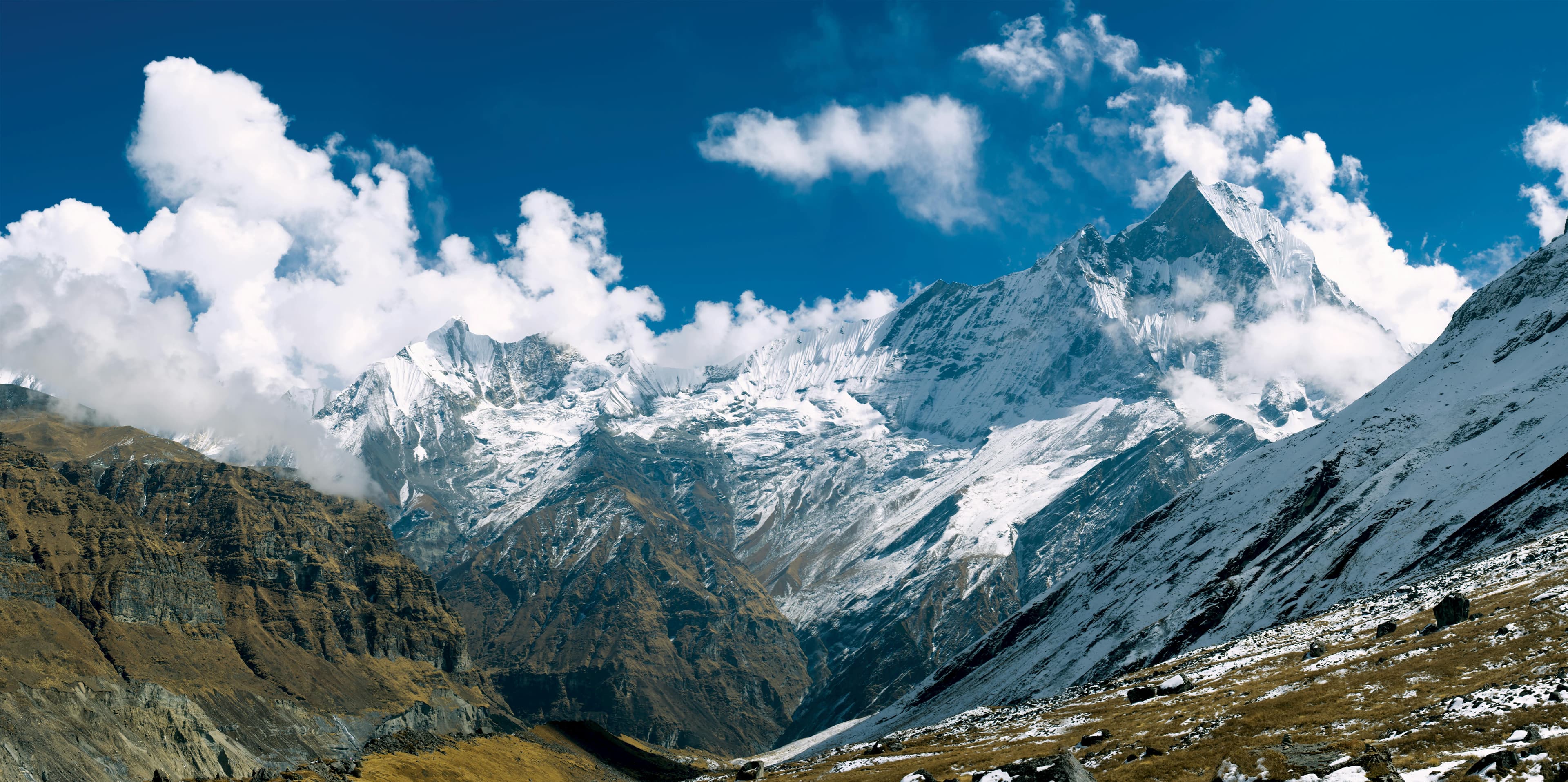
The highlight of the journey is reaching Kanchenjunga North Base Camp (Pangpema, 5,143 m), where trekkers are rewarded with an unforgettable view of the immense north face of Kanchenjunga and its surrounding peaks. Towering glaciers, sheer ice walls, and jagged ridgelines create one of the most spectacular mountain panoramas in Nepal, offering a sense of scale that few trekking destinations can match.
Unlike Nepal's more commercial trekking routes, the Kanchenjunga North Base Camp Trek remains quiet and largely untouched. Its remote location, limited visitor numbers, and pristine environment make it an ideal choice for experienced trekkers seeking solitude, adventure, and an authentic Himalayan wilderness experience.
Arrival at Tribhuwan International Airport. Our Staff member meets you and transfers you to the hotel.
Overnight at the hotel.
Morning wake-up and breakfast in the hotel
Our guide will meet you at your hotel and brief you about the upcoming trek. He will guide you through all the formalities and necessary paperwork required for the trek.
After that, we then do asightseeing tourin KathmanduValleyof famous UNESCO world heritage sites like Boudhanath, one of the largest Stupas in the world and Swayambhunath, a famous monkey temple. Apart from Sightseeing, we also get a TIMS card and permits for our trekking on this day. In the evening, we do initial preparation for the trek.
Overnight at the hotel.
After an early breakfast, we transfer to the airport for our flight from Kathmandu to Bhadrapur. The short flight takes us from the Himalayan capital to the warm plains of eastern Nepal, where our overland journey toward the mountains begins.
Upon arrival, we meet our vehicle and drive through Birtamod before gradually climbing into the hills of Ilam, Nepal's renowned tea-growing region. The road winds through green tea estates, small villages, and forested ridges, offering a completely different landscape from what we left behind in Kathmandu. We stop for lunch along the way and continue our drive through Phidim, one of the major settlements of eastern Nepal and an important trading center for the surrounding hill districts.
As the day progresses, the road follows a series of ridges and valleys with occasional views toward the higher mountains. The drive is long but rewarding, providing a glimpse into daily life in eastern Nepal, far from the country's more frequently visited trekking regions. By late afternoon, we arrive in Taplejung Bazaar (1,820m), the administrative headquarters of Taplejung District and the traditional gateway to the Kanchenjunga region.
After checking into our lodge, there is time to relax, explore the town, and make final preparations before beginning the trek the following day. Overnight stay at a teahouse or lodge.
This morning, we leave Taplejung behind and continue our journey deeper into the Kanchenjunga region. A jeep drive along a rough mountain road takes us through the settlements of Mitlung, Sinwa, and Chiruwa, following the Tamor River through a landscape of terraced fields, cardamom plantations, and forested hillsides. Although the road can be challenging at times, it offers a fascinating introduction to the remote valleys and communities that characterize eastern Nepal.
After approximately 4 – 5 hours of driving, we reach Sekathum (1,650m), where the road ends and our trek begins. Following lunch, we cross a suspension bridge over the Tamor River and enter the narrow valley of the Ghunsa Khola. The trail climbs steadily through lush subtropical forest, passing waterfalls and small resting points used by local villagers and porters traveling between settlements.
As we gain altitude, the surroundings become quieter and more remote, providing the first true sense of being in the Kanchenjunga wilderness. After 2 – 3 hours on the trail, we arrive at Amjilosa (2,510m), a small settlement nestled on a hillside above the river. The village serves as an important stop for trekkers heading north toward Ghunsa and Kanchenjunga Base Camp. Overnight stay at a teahouse.
Leaving Amjilosa in the morning, we continue our ascent deeper into the Ghunsa Khola valley. The trail immediately enters a quiet stretch of dense forest, where bamboo, rhododendron, and pine line the steep hillsides and the river can be heard far below. The path is narrow in sections but well-defined, used mainly by trekkers and local porters connecting the remote settlements of the upper valley.
As we gain altitude, the surroundings begin to shift noticeably. The air becomes cooler, and the vegetation gradually thins, revealing more open views across the valley. Along the way, we pass a few small resting points used by locals traveling between villages, though the route remains largely untouched and peaceful.
After approximately 4 – 5 hours of steady trekking, we arrive at Gyabla (also known as Kyapra), a small Tibetan-influenced settlement nestled on a hillside above the river. The village is quiet and traditional, with stone houses, prayer flags, and a strong sense of isolation that reflects life in this remote part of eastern Nepal. Overnight stay at a teahouse.
From Gyabla, the trail gradually climbs into a higher and more open section of the Ghunsa Khola valley as we make our way toward Ghunsa. The route continues through dense forest in the early part of the day, with bamboo and rhododendron giving way to pine as the altitude increases and the valley slowly broadens.
The walking is steady with a mix of gentle ascents and a few steeper sections. Along the way, we pass Phale, a small Tibetan-influenced settlement with traditional stone houses, prayer flags, and chortens that reflect the strong Buddhist heritage of this remote region. It is one of the key cultural points on today’s route before continuing further up the valley.
After approximately 5 – 6 hours of trekking, the landscape becomes more alpine in character, with clearer views of surrounding ridges and distant snow peaks. We eventually arrive at Ghunsa (3,540m), one of the most important settlements in the Kanchenjunga region, set in a wide valley surrounded by forested slopes and high mountains. Overnight stay at a teahouse.
Departing Ghunsa, we make our way deeper into the upper reaches of the Ghunsa Khola valley, where the trail steadily climbs into a noticeably more rugged and alpine environment. The forest begins to thin out as we progress, replaced by open slopes, rocky terrain, and increasingly dramatic views of the surrounding Himalayan walls.
Not long after leaving the village, the route crosses the exposed Lhiyep section, a traversing path carved into a steep hillside above the river. This stretch is known locally for its exposure and occasional rockfall, particularly during unsettled weather, and is crossed carefully before the trail continues into more stable ground further ahead.
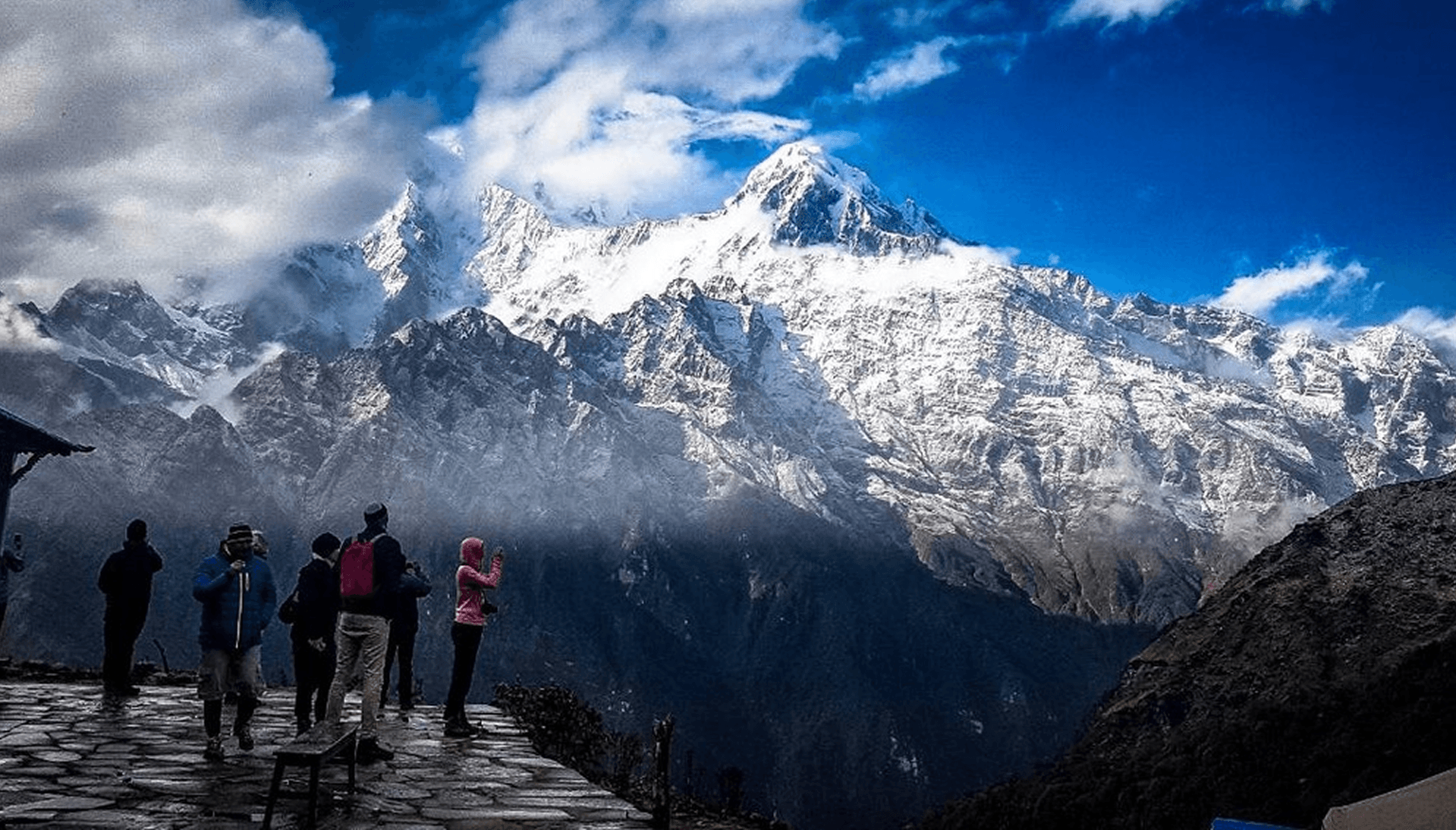
Further along the valley, the scenery becomes more striking with each step. The massive pyramid of Jannu (Kumbhakarna, 7,710 m) gradually comes into full view, dominating the skyline and serving as one of the key visual highlights of this section of the trek. Glacial formations and high ridgelines also begin to define the horizon as we move deeper into the high Himalaya.
After approximately 5 – 6 hours of trekking from Ghunsa, we reach Khambachen (4,050m), a remote settlement surrounded by cliffs, ice, and towering peaks, set in one of the most dramatic landscapes of the entire Kanchenjunga region. Overnight stay at a teahouse.
We spend a full day in Khambachen for acclimatization, allowing the body to adjust to the increasing altitude before moving further into the high Himalaya. The morning begins at a relaxed pace, with time to enjoy the quiet surroundings of the valley and the impressive views of the surrounding peaks, including the dramatic face of Jannu (Kumbhakarna, 7,710 m), which dominates the skyline above the settlement.
After breakfast, we set out on a short acclimatization hike into the surrounding slopes above Khambachen. The trail climbs gradually over rocky terrain and alpine meadows, offering expansive views of the Ghunsa Valley and nearby glaciers. This gradual ascent helps improve acclimatization while also providing a closer look at the rugged high-altitude landscape that defines this region.
After spending some time at a higher elevation, we descend back to Khambachen for lunch and rest. The afternoon is free to relax, explore the settlement, or simply take in the mountain scenery. As one of the most remote villages on the route, Khambachen offers a peaceful environment surrounded by towering cliffs, ice formations, and the constant sound of the Ghunsa Khola below. Overnight stay at a teahouse.
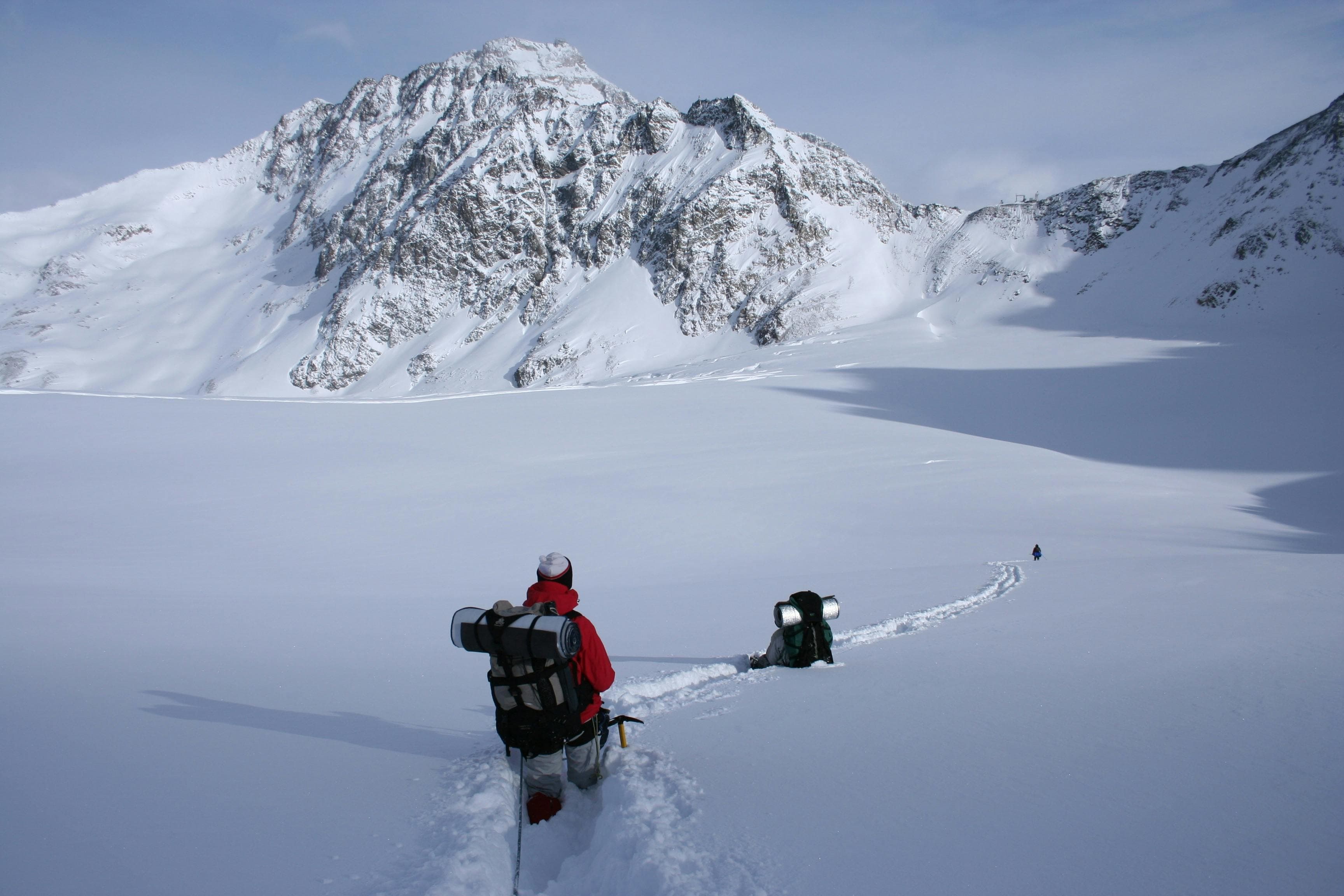
After an early breakfast, we leave Khambachen and begin our climb into the upper Kanchenjunga valley, where the landscape quickly opens into a broad glacial basin. The trail follows the upper Ghunsa Valley, gradually moving into a more rugged and exposed alpine environment surrounded by towering ridges and moraine slopes.
As we gain altitude, vegetation fades away and the terrain becomes increasingly raw, made up of rock, ice, and braided meltwater streams spreading across the valley floor. The walking slows naturally due to altitude and uneven ground, with a growing sense of isolation as we enter this remote high-mountain section.
Throughout the day, the massive peak of Jannu (Kumbhakarna, 7,710 m) remains a dominant presence in the background, while the valley ahead opens toward the glacial world leading up to Kanchenjunga. After approximately 4 – 5 hours of trekking, we arrive at Lhonak (4,780m), a small seasonal settlement on a wide glacial plain beneath dramatic Himalayan peaks. Overnight stay at a teahouse.
Today is dedicated to a high-altitude hike to Kanchenjunga North Base Camp (Pangpema), one of the most spectacular viewpoints in the entire Himalaya. We leave Lhonak early and follow the broad glacial valley north, where the landscape is completely dominated by ice, moraine, and towering mountain walls. The trail is gradual but fully exposed, with no vegetation and a strong sense of isolation throughout the walk.
As we approach Pangpema, the valley opens dramatically and the immense north face of Kanchenjunga (8,586 m) gradually comes into view, rising above a complex system of glaciers and icefalls. The scale of the surrounding peaks becomes overwhelming, offering one of the closest and most dramatic perspectives of the mountain range. Time is spent at base camp to rest and take in the scenery before beginning the return journey.
We retrace our steps back through the glacial valley to Lhonak, completing a long but unforgettable day in the high Himalaya. Overnight stay at a teahouse.
From the high glacial basin of Lhonak, we start our long descent back into the Ghunsa Valley, retracing our steps south through one of the most remote sections of the Kanchenjunga region. The trail initially crosses the open moraine fields beneath towering peaks, where the landscape remains stark and exposed before gradually softening as we lose altitude.
As we continue downhill, the vast alpine basin slowly narrows and vegetation begins to reappear along the river corridor. The route follows the Ghunsa Khola for much of the day, offering a continuous reference point as the valley transitions from glacial terrain back into alpine meadows and scattered forest patches.
Further down, the surroundings become noticeably greener, and the valley feels more sheltered as we approach the upper forest zone above Khambachen. On clear days, distant views of Jannu may still be visible above the ridgelines, offering a final reminder of the high mountains we have just left behind.
After approximately 7– 8 hours of trekking, we arrive at Ghunsa (3,540m), a well-established village in the Kanchenjunga region, where the atmosphere feels comparatively warmer and more settled after the stark glacial environment of Lhonak. Overnight stay at a teahouse.
Leaving Ghunsa in the morning, we begin our long descent back down the Kanchenjunga valley. The trail initially follows the Ghunsa Khola through a familiar alpine landscape, with open views gradually giving way to denser vegetation as we lose altitude. The walking is steady, and although predominantly downhill, the rocky sections require careful footing in places.
As we continue, the valley slowly narrows and the environment changes noticeably. Alpine forests of pine and rhododendron reappear, replacing the open high-altitude terrain we have crossed in the previous days. The descent offers a different perspective of the valley, with glimpses of waterfalls, river bends, and distant ridgelines along the route.
Further down, we pass through the Phale and Gyabla sections, where small settlements and forested slopes mark our return to the mid-hill environment. The air becomes warmer and more humid as we descend, and the trail feels increasingly lush compared to the stark upper valley.
After approximately 6 – 7 hours of trekking, we arrive at Amjilosa (2,395m), a small hillside settlement surrounded by dense forest and flowing streams, marking another significant step down from the high Himalaya. Overnight stay at a teahouse.
From Amjilosa, we begin our final descent of the Kanchenjunga trek, following a steady downhill trail through dense forest, stone steps, and narrow ridge sections. The route gradually drops in elevation, with streams, waterfalls, and lush greenery marking our return toward the lower valleys of eastern Nepal.
As we continue, the landscape transitions from cool alpine forest to warmer, more cultivated hillside terrain. After approximately 4 – 5 hours of trekking, we reach Sekathum (1,585m), where our trekking journey officially ends and we meet our vehicle for the onward journey.
From Sekathum, we board a shared public jeep for the drive toward the Ilam region. The road winds through the mid-hills of eastern Nepal, passing terraced fields, small settlements, and forested ridges. By evening, we arrive in Kanyam, a peaceful tea-growing area known for its rolling green landscapes, where we spend our final night of the journey. Overnight stay at a lodge or teahouse.
Our journey from Ilam begins in the morning as we leave behind the tranquil tea-growing hills and start the drive toward the lowlands of eastern Nepal. The road gradually descends through a mix of winding hill sections, terraced fields, and small settlements, offering a final view of the lush landscapes of Ilam before the terrain opens into the plains of Jhapa.
After approximately 3 – 4 hours of driving, we arrive at Bhadrapur Airport, the main gateway of southeastern Nepal. This final road journey provides a gradual transition from the quiet hills to the busier lowland region as we prepare for our return to Kathmandu.
From Bhadrapur, we board a short domestic flight back to Kathmandu, enjoying aerial views of Nepal’s diverse landscapes before landing in the capital city, marking the successful completion of the Kanchenjunga trekking adventure. Overnight stay at a hotel.
After breakfast in Kathmandu, we come together for a short farewell before your final departure. This marks the end of your Kanchenjunga trekking journey, a route that takes you from the lowland flight into some of the most remote and dramatic mountain landscapes of eastern Nepal.
Depending on your flight schedule, our team will assist with airport transfer arrangements. As you leave Nepal, you carry with you not just photographs and memories, but the experience of walking through isolated valleys, high glacial basins, and the towering presence of Kanchenjunga itself.
We wish you a safe journey home and hope to welcome you again for another adventure in the Himalaya.