

Arrival at Tribhuwan International Airport. Our Staff member meets you and transfers you to the hotel.
Overnight at the hotel.
Langtang Region

Trek Starting Point
Syabrubesi

Trek Ending Point
Syabrubesi

Departure From
Kathmandu

Transportation
Private Vehicle, Local Jeep

Style
Hiking and Trekking

Meal
Breakfast, Lunch, Dinner

Accommodation
Tourist standard hotel in Kathmandu, Teahouse during trek
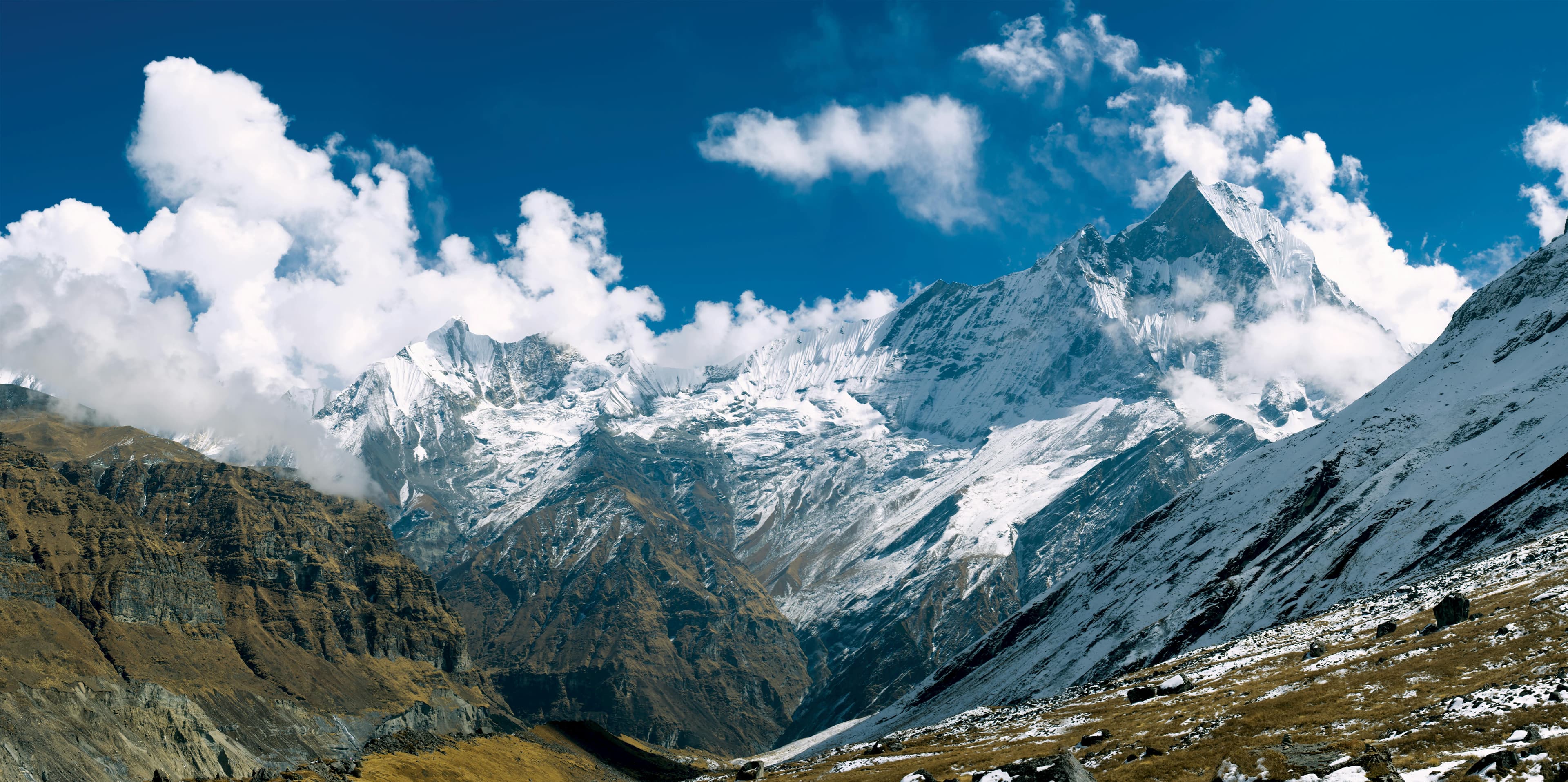
The Langtang Lirung Base Camp Trek is a rewarding Himalayan journey that combines dramatic mountain scenery, authentic Tamang culture, and an exploration of the remote landscapes beneath Langtang Lirung (7,227 m), the highest peak in the Langtang Valley. Located within Langtang National Park, this scenic teahouse trek follows the Langtang Valley through rhododendron and bamboo forests, traditional mountain villages, yak pastures, and glacial landscapes before reaching the peaceful settlement of Kyanjin Gompa.
The trail gradually climbs from the lower valley toward the high Himalayas, revealing a changing landscape with every step. Along the way, trekkers experience the warmth of Tamang communities, visit Buddhist monasteries, and gain insight into the traditions and resilience of the people who call this valley home. The route also reflects the remarkable recovery of the Langtang community after the devastating 2015 earthquake.
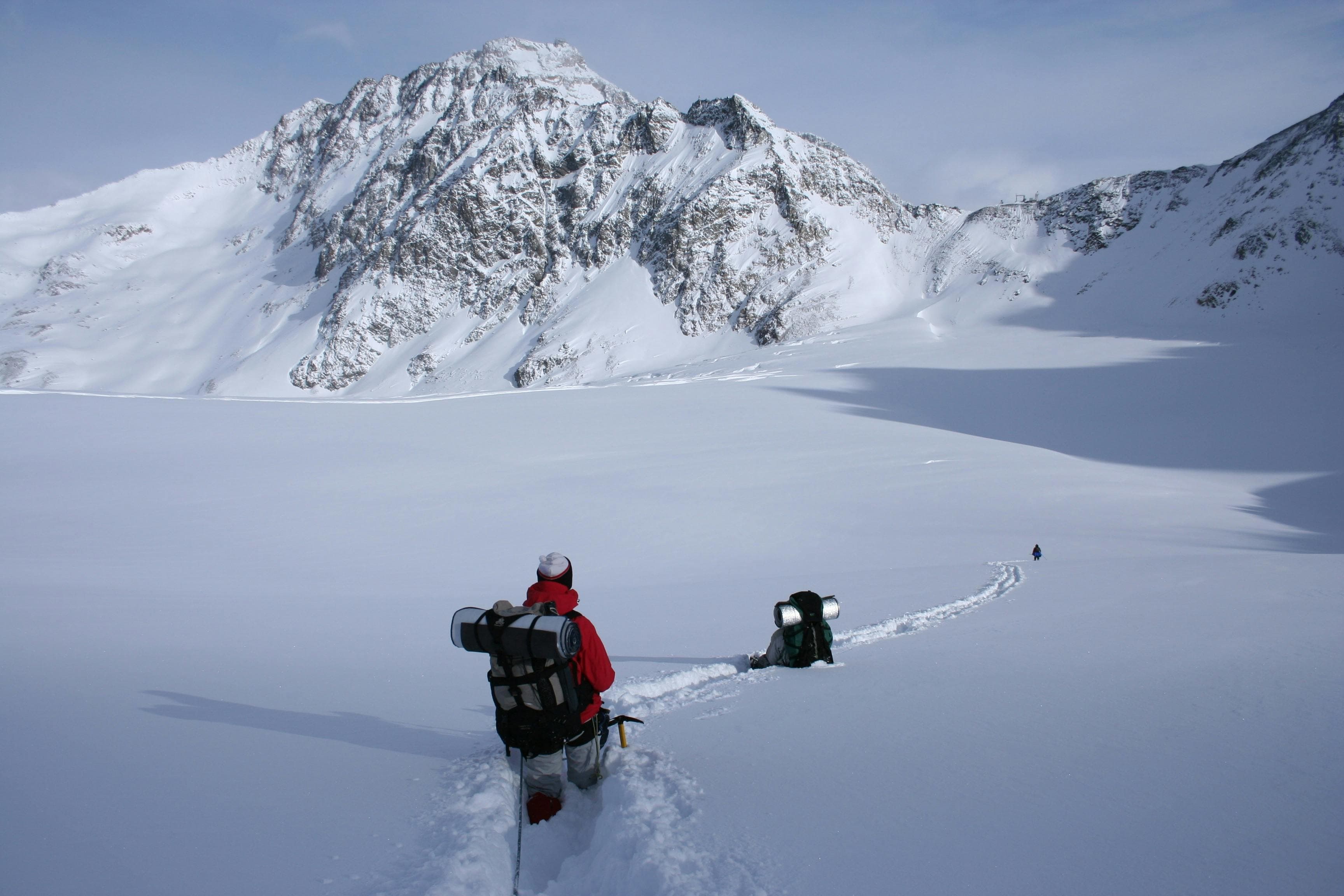
The major highlight of the trek is the hike to Langtang Lirung Base Camp (approximately 4,500 m), where trekkers are rewarded with close views of the Langtang Glacier, towering ice formations, and the impressive north face of Langtang Lirung. Standing beneath one of Nepal's most prominent peaks provides a powerful sense of scale and a deeper connection with the Himalayan landscape.
With comfortable teahouse accommodation, diverse scenery, and fewer visitors than Nepal's more established trekking regions, the Langtang Lirung Base Camp Trek is an excellent choice for trekkers looking for an authentic Himalayan adventure. It offers the perfect balance of mountain wilderness, cultural encounters, and a memorable journey through one of Nepal's most beautiful valleys.
Arrival at Tribhuwan International Airport. Our Staff member meets you and transfers you to the hotel.
Overnight at the hotel.
After breakfast at the hotel, our guide will meet you at the hotel and provide a briefing about the upcoming trek, including the itinerary, safety information, and important preparations. He will also assist you with all the necessary trekking formalities and paperwork.
After the briefing, we will go on a sightseeing tour around the Kathmandu Valley, visiting famous UNESCO World Heritage Sites such as Boudhanath Stupa, one of the largest Buddhist stupas in the world, and Swayambhunath Stupa, also known as the Monkey Temple. On this day, we will also arrange the TIMS card and other required permits for the trek.In the evening, you will have time to prepare your trekking gear and make the final arrangements for the journey ahead. Overnight at the hotel.
After breakfast in Kathmandu (1,400 m / 4,593 ft), we begin our journey by private vehicle towards Syabrubesi (1,460 m / 4,790 ft), the gateway to the Langtang region. Leaving the bustling capital behind, the drive initially follows a smooth highway through scenic countryside, terraced fields, and small settlements.
As we progress, the road gradually becomes more winding and narrow, offering beautiful views of rivers, hills, and traditional villages along the way. We pass through towns such as Trishuli and Dhunche, with glimpses of distant Himalayan foothills enhancing the journey. The road conditions vary between paved and rough mountain sections, adding a sense of adventure to the drive.
After approximately 6 – 7 hours of driving (around 120 – 130 km depending on route conditions), we arrive at Syabrubesi (1,460 m / 4,790 ft), a small riverside town nestled at the confluence of the Bhote Koshi and Langtang rivers. Surrounded by green hills and mountain scenery, Syabrubesi serves as the starting point for treks into the Langtang Valley. Overnight stay at a local lodge.
Leaving Syabrubesi (1,460 m / 4,790 ft) behind, we begin our trek into the Langtang region following the trail along the Bhote Koshi River. The route initially descends slightly before crossing suspension bridges and gradually climbing through subtropical forests of bamboo, oak, and rhododendron.
As we move deeper into the valley, the trail continues along the river, passing small settlements and occasional teahouses. The sound of rushing water and the dense forest setting create a peaceful trekking atmosphere. Along the way, we may encounter wildlife such as langur monkeys and a variety of bird species.
After several hours of steady trekking, the trail begins a more consistent ascent as we enter thicker forested terrain. The valley narrows, and the landscape becomes more shaded and alpine in character. We finally reach Lama Hotel (2,480 m / 8,136 ft), a small settlement surrounded by forest on the banks of the Langtang River. The trek covers approximately 11 – 12 km (6.8–7.5 miles) and takes around 5 – 6 hours depending on pace and trail conditions. Overnight at a teahouse in Lama Hotel.
Departing from Lama Hotel (2,480 m / 8,136 ft), we begin our trek deeper into the Langtang Valley, following the trail that steadily ascends alongside the Langtang Khola. The route initially winds through dense forests of rhododendron, oak, and bamboo, with the river running close by and occasional clearings revealing glimpses of the surrounding hills.
As we continue, the forest gradually thins with increasing altitude, and the valley begins to open up. We pass through settlements such as Ghodatabela (3,030 m / 9,940 ft), where the landscape transitions into alpine meadows and expansive mountain scenery. Snow-capped peaks start to dominate the skyline, marking our entry into a more high-altitude environment.
Further along, the trail continues its steady ascent through open yak pastures and glacial terrain before reaching Langtang Village (3,430 m / 11,253 ft). This rebuilt Tamang settlement sits in a dramatic mountain setting surrounded by rugged Himalayan peaks.
The trek covers approximately 14–15 km (8.7–9.3 miles) and takes around 6–7 hours, depending on pace and conditions. Overnight at a teahouse in Langtang Village.
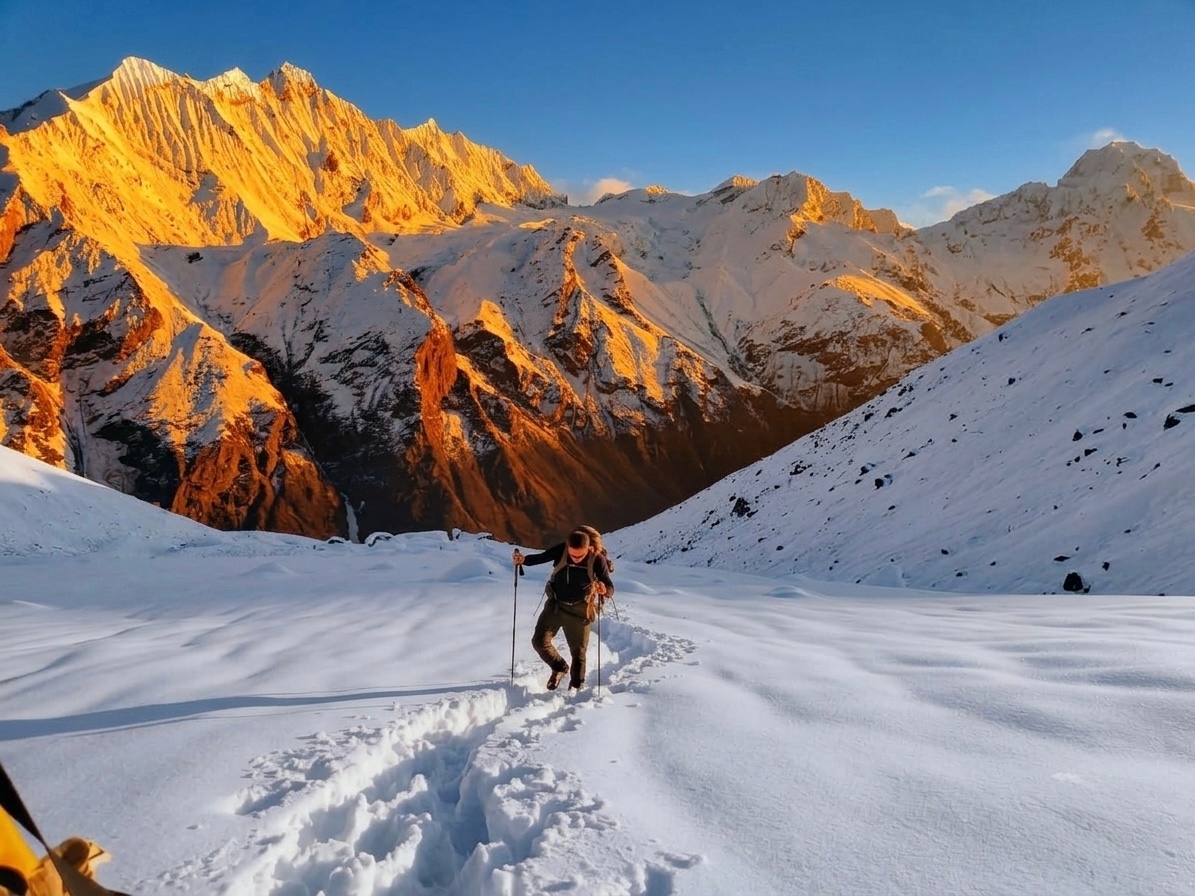
Continuing from Langtang Village (3,430 m / 11,253 ft), we set out on a gradual ascent deeper into the upper Langtang Valley towards Kyanjin Gompa. The trail follows a wide glacial valley, passing through open alpine terrain with scattered yak pastures and traditional stone settlements. The surrounding scenery becomes increasingly dramatic, with snow-capped peaks rising sharply on both sides of the valley.
As we progress, we pass through small seasonal settlements such as Mundu and Sindum, where the landscape reflects the high-altitude lifestyle of the local Tamang communities. The valley widens further, offering spectacular views of peaks including Langtang Lirung, which dominates the skyline throughout the day’s journey.
The trail continues with a steady, gentle climb along the glacial river, with occasional suspension bridges and mani walls marking the cultural significance of the region. After several hours of trekking, we reach Kyanjin Gompa (3,798 m), a beautiful settlement surrounded by towering Himalayan peaks and glaciers.
The trek covers approximately 6 – 7 km (3.7 – 4.3 miles) and takes around 3 – 4 hours, depending on pace and acclimatization. Overnight at a teahouse in Kyanjin Gompa.
Today's adventure begins with a rewarding hike from Kyanjin Gompa (3,870 m / 12,697 ft) towards Langtang Lirung Base Camp (4,500m), following a rugged trail across alpine meadows, glacial moraine, and rocky terrain beneath the towering north face of Langtang Lirung (7,227 m / 23,711 ft). As we gain elevation, the landscape becomes increasingly dramatic, offering magnificent views of the Langtang Glacier, icefalls, and the surrounding snow-capped Himalayan peaks.
The round-trip hike takes approximately 5 – 7 hours and covers around 8 – 10 km (5–6.2 miles), depending on the turnaround point and trail conditions. Although the ascent is gradual, the high altitude and uneven moraine terrain make this one of the more demanding days of the trek, requiring a steady pace and frequent breaks.
Upon reaching the upper glacial basin at approximately 4,500 m (14,764 ft), we are rewarded with breathtaking close-up views of the Langtang Lirung massif and its impressive glacier. After spending time admiring the pristine alpine scenery and capturing unforgettable photographs, we retrace our steps to Kyanjin Gompa, where we spend another night in a comfortable teahouse surrounded by the spectacular Himalayan landscape.
Leaving Kyanjin Gompa in the morning, we begin our long descent back towards Lama Hotel (2,500 m / 8,202 ft), retracing the scenic trail through the Langtang Valley. The route follows the Langtang Khola, passing through open alpine landscapes, yak pastures, glacial streams, and the reconstructed section of Langtang Village, before continuing into dense rhododendron and oak forests.
The trek takes approximately 6 – 7 hours and covers around 17 – 19 km (10.6 – 11.8 miles), depending on pace and trail conditions. Although the route is mainly downhill, it includes several short ascents and uneven forest sections, making it a full and steady trekking day.
As we descend, the scenery gradually shifts from high alpine terrain to lush woodland, with chances to spot wildlife and enjoy continuous views of Langtang Lirung and surrounding peaks. We eventually arrive at Lama Hotel, nestled in a peaceful river valley, where we spend the night in a teahouse surrounded by forest.
Following breakfast at Lama Hotel, we begin our trek towards Syabrubesi (1,462 m), descending through the peaceful Langtang River valley along forested trails and riverside paths. The route gradually winds downhill through dense bamboo, oak, and rhododendron forests, passing small settlements such as Rimche, Bamboo, Pairo, and Domen along the way. Several suspension bridges and cascading waterfalls add scenic highlights throughout the journey.
The trek takes approximately 5 – 6 hours and covers around 11 km, depending on pace and trail conditions. As this is mostly a descending route from Lama Hotel (2,500 m), the trek is physically less demanding than previous days, though some rocky and uneven sections require careful footing, especially after rain.
As we continue lower into the valley, the alpine scenery slowly transitions into warmer subtropical forests filled with birdlife and traditional hillside landscapes. The sound of the Langtang Khola accompanies much of the trail, creating a calm and relaxing atmosphere on the final trekking day.
We arrive at Syabrubesi, the gateway village of the Langtang region, where we spend the night in a teahouse surrounded by terraced hillsides and local village life. This peaceful riverside settlement marks the conclusion of the trekking journey before returning to Kathmandu. Overnight stay at a teahouse.
After breakfast in Syabrubesi (1,550 m), we begin our scenic drive back to Kathmandu (1,400 m), following the winding mountain highways alongside the Trishuli River. Leaving the Langtang region behind, the journey passes through terraced hillsides, rural villages, riverside settlements, and lush mid-hill landscapes, offering a final glimpse of Nepal’s countryside.
The drive takes approximately 6 – 8 hours, depending on road and traffic conditions, and covers around 120 – 130 km. The road is partly paved and partly rough mountain terrain, especially in sections closer to Syabrubesi, making the journey adventurous yet rewarding.
Along the route, we pass through small towns and roadside markets where short breaks can be taken for tea, lunch, and refreshments. As we gradually descend toward the Kathmandu Valley, the scenery transitions from remote mountain landscapes to busy urban surroundings.
Upon arrival in Kathmandu, we transfer to the hotel and enjoy a well-deserved rest after completing the Langtang trekking adventure.
Today marks the completion of your Langtang Lirung Base Camp Trek. Depending on your flight schedule, you will be transferred from your hotel in Kathmandu (1,400 m / 4,593 ft) to Tribhuvan International Airport for your onward departure.
As you leave Nepal, we hope you take with you unforgettable memories of the Langtang Valley, its beautiful mountain scenery, traditional Tamang culture, and peaceful Himalayan trails. Thank you for being part of this journey, and we look forward to welcoming you again for future adventures in Nepal.