

Arrival at Tribhuwan International Airport. Our Staff member meets you and transfers you to the hotel.
Overnight stay at a hotel.
Mustang Region

Trek Starting Point
Jomsom

Trek Ending Point
Jomsom

Departure From
Kathmandu

Transportation
Tourist Coach, Domestic flight

Style
Hiking and Trekking

Meal
Breakfast, Lunch, Dinner

Accommodation
Tourist standard hotel in Kathmandu, Teahouse during trek
The Upper Mustang Trek is a journey into one of Nepal’s most remote and culturally distinctive regions, a place shaped by ancient trade routes, Tibetan Buddhist traditions, and the stark beauty of the Himalaya. Once known as the “Last Forbidden Kingdom,” Upper Mustang remained closed to foreign visitors until 1992, helping preserve a remarkable cultural heritage and many traditions that have endured for generations.
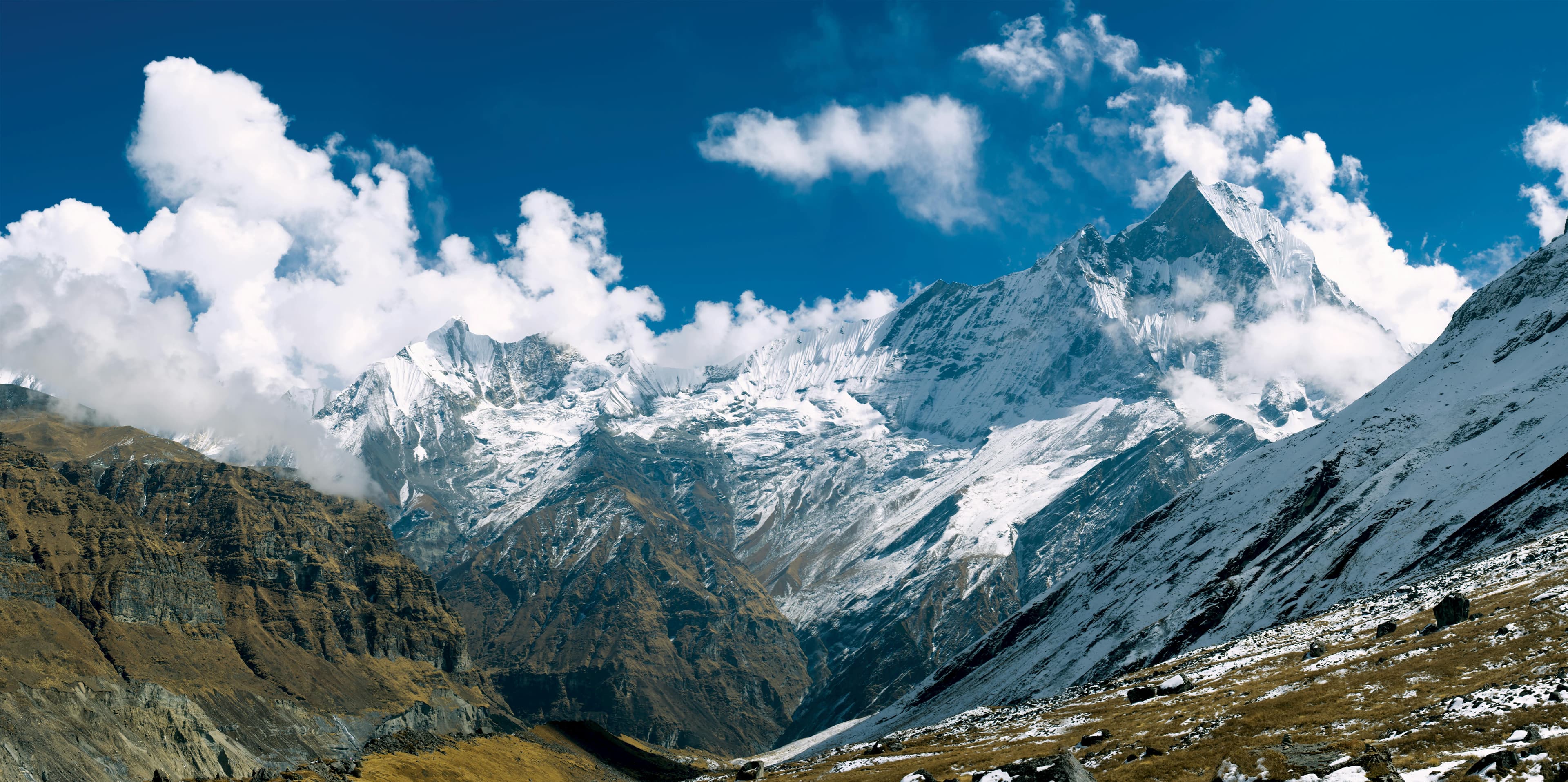
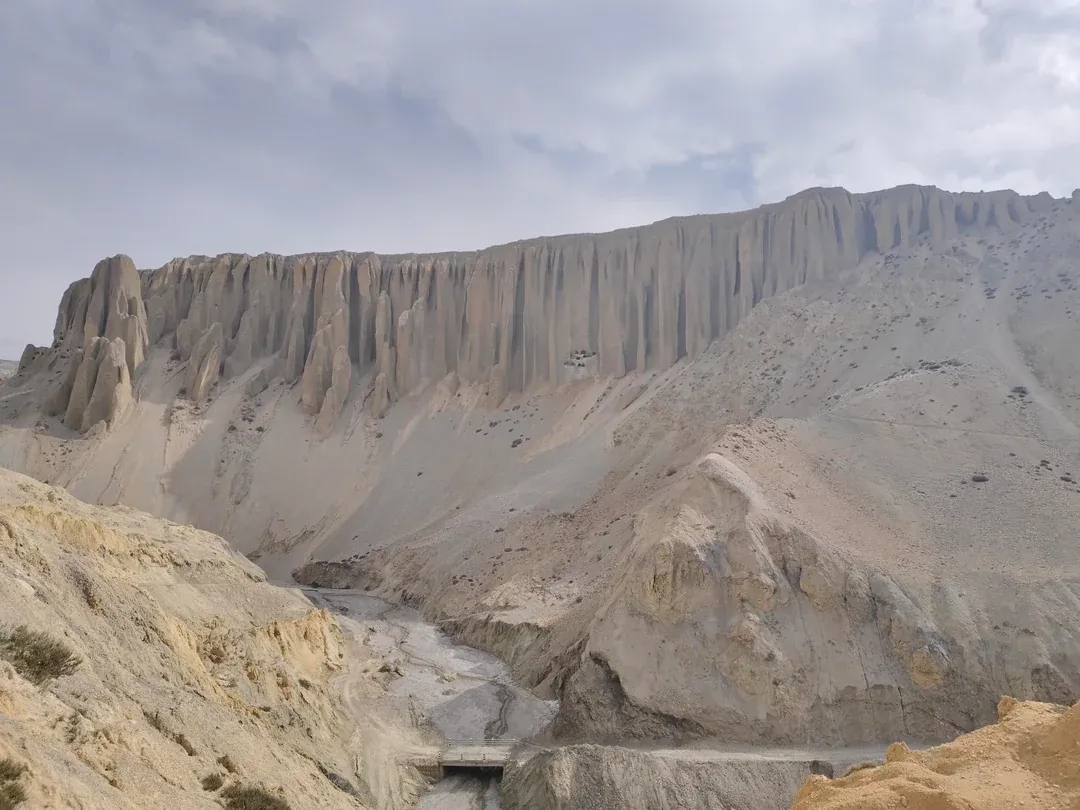
Following ancient trade routes through the Kali Gandaki Valley, the trek leads into a dramatic trans-Himalayan landscape unlike most trekking regions in Nepal. Lush forests and green valleys gradually give way to towering cliffs, wind-sculpted canyons, vividly colored rock formations, and vast high-altitude desert terrain. Sheltered in the rain shadow of the Annapurna and Dhaulagiri ranges, Mustang’s barren valleys and rugged mountains create an environment remarkably reminiscent of the Tibetan Plateau.
The trail passes through traditional villages where whitewashed homes, prayer flags, chortens, and centuries-old monasteries reflect the region’s enduring Tibetan Buddhist heritage. Ancient cave dwellings carved into towering cliffs offer glimpses into Mustang’s centuries of history, while the quiet rhythms of village life reveal a culture that has adapted to this remote Himalayan environment for generations.
The journey reaches its cultural heart at Lo Manthang, the historic walled capital of the former Kingdom of Mustang. Its narrow lanes, traditional architecture, monasteries, and surrounding villages preserve a distinctive sense of history and identity. Depending on the season, trekkers may also witness vibrant local festivals and religious traditions, offering an intimate encounter with the living heritage of the region.
The trek also connects with Muktinath, one of Nepal’s most revered pilgrimage sites and a place of profound significance to both Hindus and Buddhists. Set against Mustang’s stark mountain landscape, Muktinath adds a deeply spiritual dimension to the journey and highlights the region’s importance as a crossroads of faith and culture.
More than a trek through spectacular landscapes, the Upper Mustang Trek is an opportunity to step into a remote Himalayan world where ancient trails, sacred sites, living traditions, and desert mountains remain closely intertwined. For travelers seeking a deeper side of Nepal, Upper Mustang offers a journey where history, culture, and the mountains come together in a way that stays with you long after the trail ends.
Arrival at Tribhuwan International Airport. Our Staff member meets you and transfers you to the hotel.
Overnight stay at a hotel.
After breakfast at the hotel, our guide will meet you at the hotel and provide a briefing about the upcoming trek, including the itinerary, safety information, and important preparations. He will also assist you with all the necessary trekking formalities and paperwork.
After the briefing, we will go on a sightseeing tour around the Kathmandu Valley, visiting famous UNESCO World Heritage Sites such as Boudhanath Stupa, one of the largest Buddhist stupas in the world, and Swayambhunath Stupa, also known as the Monkey Temple. On this day, we will also arrange the TIMS card and other required permits for the trek.In the evening, you will have time to prepare your trekking gear and make the final arrangements for the journey ahead. Overnight at the hotel.
After an early morning breakfast in Kathmandu, we set off toward Pokhara along the Prithvi Highway, following the Trishuli River as it winds through Nepal’s mid-hills. The drive begins with gradual movement out of the valley, where city traffic slowly gives way to open highway stretches and scattered roadside settlements.
The route passes through key points such as Mugling and Malekhu, where short stops for tea or meals naturally fit into the journey. Road conditions vary between smooth sections and slower patches due to traffic or ongoing maintenance, so the drive remains steady and unhurried. The river continues alongside much of the highway, shaping much of the route through hills and bends.
As we approach Pokhara, the landscape opens up and the journey becomes more relaxed. The drive concludes in the lakeside city, marking a smooth transition from the capital’s energy to Pokhara’s calm atmosphere. Overnight stay at a hotel.
An early morning flight from Pokhara (822 m / 2,697 ft) takes us deep into the Himalayas, offering spectacular views of the Annapurna and Dhaulagiri ranges before touching down in Jomsom (2,720 m / 8,923 ft). The contrast is immediate, with lush hills giving way to Mustang’s rugged, wind sculpted landscapes and the broad valley of the Kali Gandaki.
After a short break in Jomsom, we begin trekking north along the ancient trade route that once connected Nepal and Tibet. The trail is gentle and well defined, following the wide riverbed through a dramatic landscape of barren cliffs, gravel plains, and snow capped peaks. As we gain ground, the atmosphere becomes distinctly Tibetan, with prayer flags, chortens, and traditional settlements appearing along the route.
By afternoon, we arrive at Kagbeni (2,810 m / 9,219 ft), one of Mustang’s most fascinating villages and the historic gateway to Upper Mustang. Its narrow alleyways, ancient mud brick houses, and centuries old monastery offer a glimpse into a culture that has remained remarkably preserved. Overnight stay at a teahouse.
Leaving Kagbeni (2,810 m / 9,219 ft), we enter the restricted region of Upper Mustang, following an ancient trade route that has linked Nepal and Tibet for centuries. The trail passes through the picturesque villages of Tangbe and Chhusang, known for their traditional mud brick houses, barley fields, apple orchards, and distinctive red sandstone cliffs that define the lower Mustang landscape.
As we continue north, the valley narrows and the scenery becomes increasingly dramatic. We pass striking rock formations, ancient cave dwellings carved into the cliffs, and colorful canyon walls sculpted by wind and water over thousands of years. On clear days, impressive views of Nilgiri (7,061 m) dominate the southern skyline, while the barren trans Himalayan terrain reveals the unique character of Upper Mustang.
After crossing the Kali Gandaki and climbing steadily above the gorge, we reach Chele (3,050 m / 10,007 ft), a traditional Mustang village perched high above the valley. Surrounded by rugged hills and expansive desert landscapes, Chele marks the true beginning of the Upper Mustang trekking experience. Overnight stay at a teahouse.
From Chele (3,050 m / 10,007 ft), we begin by entering a narrow stretch of canyon terrain where the trail quickly gains elevation. The landscape feels increasingly remote as we move through dry, wind-carved cliffs and steep gullies that define this section of Upper Mustang.
We continue the steady ascent toward Samar, a small but important settlement set beneath towering rock walls and surrounded by chortens and prayer flags. From here, we climb further into open, high-altitude terrain, crossing the passes of Taklam La (3,624 m / 11,890 ft) and Dajori La (3,735 m / 12,255 ft), where we are often rewarded with distant views of the Annapurna range and the vast, arid ridgelines of the Damodar Himal.
After crossing the passes, we gradually descend into a more settled landscape as we approach Geling (3,570 m / 11,713 ft). Here we enter a traditional village of whitewashed houses, barley fields, and ancient monasteries, where we settle for the night in a teahouse.
From Geling (3,570 m / 11,713 ft), we gradually ascend out of the village into a wide, open landscape of wind-carved ridges and dry alpine terrain. The trail feels expansive here, with long views across the upper Kali Gandaki Valley as we move deeper into the heart of Upper Mustang.
We continue toward Ghami, one of the important settlements of the region, known for its long mani wall and strong Tibetan Buddhist heritage. Beyond Ghami, the trail climbs steadily toward the high point of the day, crossing Nyi La Pass (3,950 m / 12,959 ft). From the top, we are rewarded with sweeping views of the Mustang landscape, with distant Himalayan peaks such as Nilgiri and surrounding ridgelines visible on clear days.
After crossing the pass, we begin a gradual descent through barren hills and eroded cliffs before reaching the ancient walled village of Tsarang (3,560 m / 11,680 ft). Once an important cultural and political center of the former Mustang kingdom, Tsarang today remains rich in history, with its monastery, palace ruins, and traditional stone architecture. Overnight stay at a teahouse.
After breakfast in Tsarang (3,560 m / 11,680 ft), we begin a gradual descent into open, arid terrain as the valley widens and the landscape becomes even more dramatic. The trail leads us through windswept hills and eroded cliffs, with expansive views across the upper Mustang plateau.
We make our way toward Lo La Pass (3,950 m / 12,959 ft), a gentle but rewarding high point of the day. From here, the first distant views of Lo Manthang appear on the horizon, set against a vast backdrop of barren mountains and open plains. On clear days, the silhouettes of Nilgiri, Annapurna range, and surrounding Himalayan ridges can be seen far to the south.
From the pass, we descend steadily toward the ancient walled city of Lo Manthang (3,840 m / 12,598 ft), the former capital of the Kingdom of Mustang. Entering through its historic gates, we step into a maze of narrow alleys, whitewashed houses, and centuries-old monasteries that reflect the deep Tibetan Buddhist heritage of the region. Overnight stay at a teahouse.
Today is a complete rest day in Lo Manthang (3,840 m / 12,598 ft), allowing the body to fully acclimatize to the high-altitude environment of Upper Mustang. After breakfast, the day is kept free with no major walking planned, giving time to relax and recover after several days of trekking through the high plateau.
You may choose to simply rest within the walled city or take gentle walks around the village at your own pace. The surroundings of Lo Manthang offer a peaceful atmosphere, with its narrow alleys, whitewashed houses, and views across the vast, wind-swept landscape of Mustang. Overnight stay at a lodge or teahouse.
Today, after breakfast in Lo Manthang (3,840 m / 12,598 ft), we set out for a full day of exploration within the ancient walled city and its surrounding landscapes. The pace remains relaxed, allowing ample time to experience both the cultural depth and dramatic scenery of Upper Mustang.
We begin by exploring the narrow alleys of Lo Manthang, visiting key monasteries such as Jampa Lhakhang, Thubchen Gompa, and Chode Gompa, where centuries-old murals and strong Tibetan Buddhist traditions are still preserved. The royal palace area and historic city gates reflect the heritage of the former Mustang kingdom.
Later, we can make an excursion to Chhoser village, home to the famous sky caves (cave dwellings) carved high into the cliffs. This area offers a fascinating glimpse into ancient Himalayan life, with multi-level cave systems, meditation chambers, and striking views across the arid valleys of Upper Mustang. In the afternoon, we return to Lo Manthang for a relaxed walk or rest. Overnight stay at a teahouse.
We begin the day by leaving Lo Manthang (3,840 m / 12,598 ft), stepping out through its historic gates and back into the vast openness of the Upper Mustang plateau. The trail quickly opens into wide, windswept terrain as we retrace part of the high route, surrounded by barren hills and distant Himalayan horizons.
We make a steady ascent toward Lo La Pass (3,950 m / 12,959 ft), the final vantage point over Lo Manthang, before the landscape gradually transitions into long, undulating ridgelines and dry valley systems. The walk is expansive and remote, with little vegetation and a strong sense of high-altitude wilderness.
From here, we descend into central Mustang, passing isolated stretches of the old trade route before reaching Ghami (3,520 m / 11,549 ft). Known for its impressive mani wall, chortens, and traditional Tibetan Buddhist settlement structure, Ghami appears as a quiet cluster of houses set within one of the most dramatic desert landscapes in the Himalayas. Overnight stay at a teahouse.
After leaving Ghami (3,520 m / 11,549 ft), we gradually step back onto the open trail of Upper Mustang, where the route unfolds across a wide, windswept plateau. The walking is steady, with gentle undulations through a stark, high-altitude landscape shaped by wind and time.
We continue across the central Mustang terrain, crossing sections of the ancient trade path marked by chortens and mani walls. The trail moves over a series of gentle high ridges and open valleys, gradually descending and rising as we make our way toward the Samar region, with dramatic canyon formations and barren hills stretching into the distance.
By afternoon, we reach the Samar area, a quiet settlement nestled beneath steep cliffs and prayer-flag-lined slopes. Surrounded by rugged canyon scenery, it offers a peaceful resting point after a full day on the trail. Overnight stay at a teahouse.
We set out from Samar (3,660 m / 12,008 ft) as the trail gradually drops away from the high Mustang plateau and enters a deep, dramatic canyon landscape. The environment changes noticeably, with open ridges replaced by steep cliffs and winding paths that trace the contours of the valley.
The descent continues through a striking section of Upper Mustang, following ancient footpaths that cut across eroded rock formations and red canyon walls. As we lose elevation, the valley begins to open toward the Kali Gandaki basin, offering ever-changing views of rugged cliffs, cave dwellings, and layered mountain terrain.
By afternoon, we reach Chhusang (2,980 m / 9,777 ft), a traditional settlement positioned at the meeting point of the Narshing and Kali Gandaki rivers. Surrounded by red cliffs and terraced fields, it marks a clear transition from the high plateau into the lower Mustang region. Overnight stay at a lodge or teahouse.
We leave Chhusang (2,980 m / 9,777 ft) behind and gradually begin the long ascent out of the lower Mustang valley, following a trail that steadily climbs into open alpine terrain. The path winds upward through dry slopes and ridgelines, where the landscape becomes wider and more exposed as we gain elevation.
We continue toward the Gyu La high ridge (approx. 4,070 m / 13,353 ft), the main crossing point of the day. From the top, the views open widely across the Mustang region, with distant Himalayan peaks visible on clear days rising above the vast, arid valleys below. After a brief traverse along the ridge, the trail begins a gradual descent toward the Muktinath basin.
By afternoon, we arrive in Muktinath (3,800 m / 12,467 ft), a sacred pilgrimage site revered by both Hindus and Buddhists. Set beneath a dramatic mountain backdrop, it is known for its temple complex, eternal flame, and 108 holy water spouts, offering a culturally rich and meaningful end to the day’s trek. Overnight stay at a teahouse.
Early in the morning, we visit the sacred Muktinath Temple (3,800 m / 12,467 ft) for a short exploration and spiritual experience. Revered by both Hindus and Buddhists, the temple complex is known for its eternal flame and 108 holy water spouts, set against the backdrop of the high Himalayas.
After breakfast, we begin our descent from Muktinath and follow the trail down into the Kali Gandaki Valley. The route passes through traditional settlements such as Jharkot and Khingar, where ancient monasteries, stone-built houses, and terraced fields reflect the deep cultural heritage of the region.
As we continue downhill, the landscape gradually becomes drier and more open, with dramatic views of Nilgiridominating the valley. By afternoon, we arrive in Jomsom (2,720 m / 8,923 ft), the district headquarters of Mustang, where we settle for the night at a teahouse.
After an early breakfast in Jomsom (2,720 m / 8,923 ft), we proceed to the small mountain airstrip for our scenic flight back to Pokhara (822 m / 2,697 ft). As the aircraft takes off, we leave behind the stark beauty of the Kali Gandaki Valley and gradually gain a bird’s-eye view of the deep gorges and surrounding Himalayan peaks, including Nilgiri and the Annapurna range on clear days.
The short but spectacular flight follows the course of the valley before descending into the greener hills of the Pokhara region. Upon arrival, we are welcomed by the warmer climate and relaxed lakeside atmosphere of Pokhara, marking the completion of the Upper Mustang journey. Overnight stay at a hotel.
Today is dedicated to exploring Pokhara, a relaxed transition after days in the high mountains of Upper Mustang. The pace slows down completely as we move around the lakeside city, taking time to enjoy its open atmosphere and clear views of the Annapurna range when the weather permits.
The morning usually begins at Phewa Lake, where the reflection of the surrounding hills creates a calm start to the day. From here, we continue toward Sarangkot, one of the most famous viewpoints in the region, offering sweeping sunrise or daytime views over Pokhara Valley, Phewa Lake, and the distant Himalayan range. The drive is short and easy, focused entirely on scenery and experience.
Later in the day, we explore key cultural and natural highlights including World Peace Pagoda, Davis Falls, Gupteshwor Cave, and the lively Lakeside area. Each stop reveals a different side of Pokhara, from peaceful hilltop viewpoints to natural wonders and vibrant cafés by the lake. By the end of the day, Pokhara offers a gentle and reflective close to the journey through Upper Mustang. Overnight stay at a hotel.
After breakfast in Pokhara (822 m / 2,697 ft), we begin our drive back to Kathmandu (1,400 m / 4,593 ft), gradually leaving the lakeside valley behind and heading into the mid-hills of central Nepal. The route follows the Prithvi Highway, winding along rivers, terraced slopes, and scattered settlements that reflect everyday life in the countryside.
The journey takes approximately 6 – 8 hours depending on road and traffic conditions, with short stops along the way for refreshments and rest. As we approach the Kathmandu Valley, the scenery slowly transitions from rural landscapes to a more urban environment, marking our return to the capital.
Upon arrival in Kathmandu, we transfer to the hotel. The remainder of the day is free to relax or explore at leisure, marking the end of the journey through Upper Mustang and the Himalayas of Nepal. Overnight stay at a hotel.
We conclude the journey in Kathmandu (1,400 m / 4,593 ft), where the final day is kept free for rest, reflection, or last-minute exploration of the city. After completing the expedition through Upper Mustang, this time allows you to unwind and absorb the experience of the Himalayas before departure.
Depending on your flight schedule, transfer to Tribhuvan International Airport will be arranged for your onward journey. As the trip comes to an end, we part ways with lasting memories of remote mountain trails, ancient walled cities, sacred sites, and the shared experience of the journey through the Himalayas